The short answer
There are two halves to a vine weevil problem, and only one of them matters. The adult beetles notch the edges of leaves at night in spring and summer, which looks alarming but is almost entirely cosmetic. The damage that kills plants comes from the fat white C-shaped grubs that eat roots through autumn and winter, and they are far worse in pots and containers. The fix is biological nematodes watered into the compost in late summer, backed up by picking adults off by torchlight and checking rootballs whenever you pot a plant.
Vine weevil at a glance
Vine weevil (Otiorhynchus sulcatus) is one of the most common garden pests, and one of the most misunderstood, because the damage you see is not the damage that counts. Here is the quick picture before we get into what to do about it.
| Vine weevil | |
|---|---|
| What it is | A dull black, flightless beetle about 9mm (5/16in) long; the grubs are plump, white, legless and C-shaped, up to 10mm (3/8in) with pale brown heads |
| What it attacks | Adults notch leaves of evergreens (Rhododendron, Euonymus), Heuchera, Bergenia, Primula and strawberry; grubs eat the roots of these and of plants in pots |
| Worst in | Containers and plants in pots, where grubs are far more damaging than in open ground |
| Adult damage | Irregular notches bitten from leaf margins, spring and summer, at night. Largely cosmetic |
| Grub damage | Roots eaten September to March; plants wilt, collapse and die, often with no warning |
| Signs | Notched leaf edges in summer; a plant that wilts or lifts out of its pot with no roots in autumn or winter |
Adult damage versus grub damage
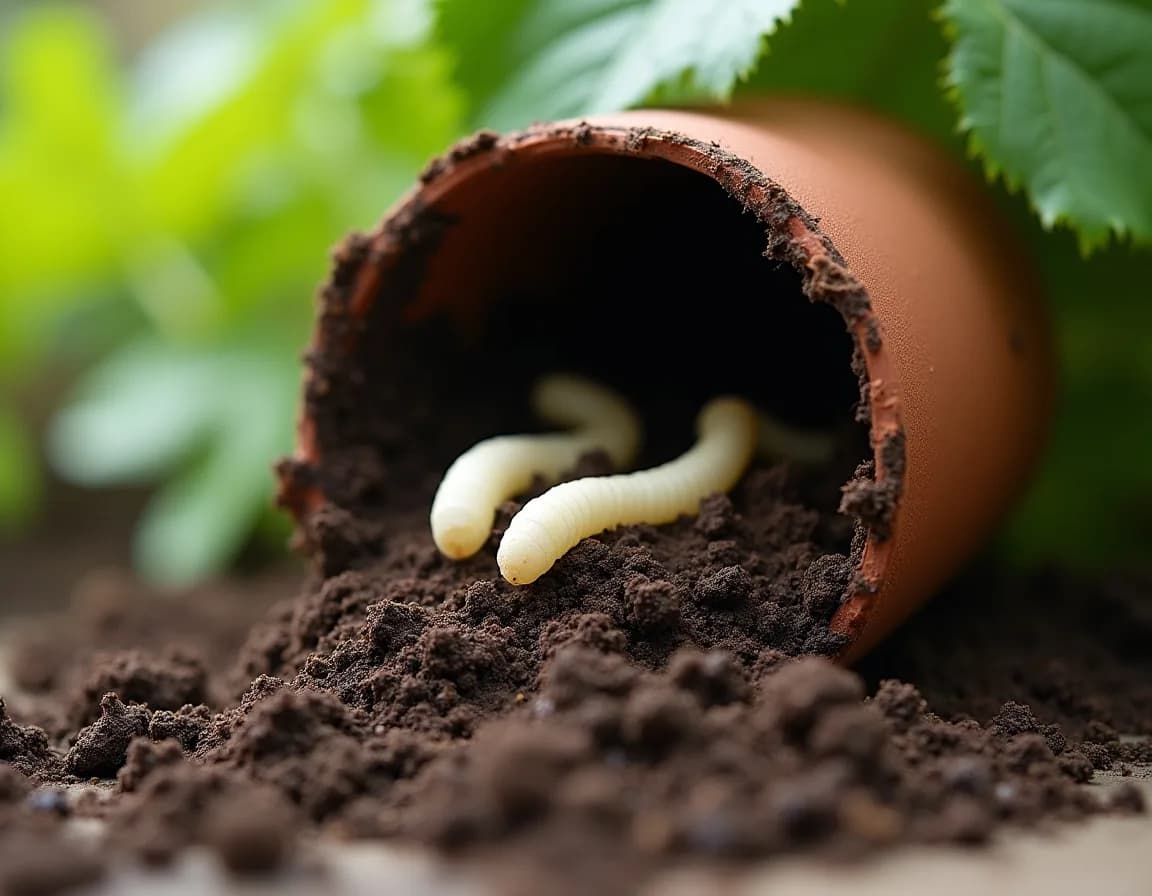
The thing to understand first is that an adult and a grub do very different jobs, and only the grub is a real threat.
The adult is a dull black, flightless beetle about 9mm long. It feeds at night and hides in leaf litter by day, which is why you rarely catch one in the act. All you see is the result: irregular notches bitten out of the edges of leaves through spring and summer. It goes for evergreens in particular, so rhododendrons, evergreen euonymus, bergenias, heucheras, primulas and strawberries all tend to show it. It looks bad, but a notched leaf still works. On an established shrub this is cosmetic and I would not reach for a treatment on the strength of it alone.
The grub is the one that kills. It is a plump, white, legless, C-shaped larva up to 10mm long with a pale brown head, and it lives in the soil or compost eating roots. By the time a plant wilts, collapses or lifts cleanly out of its pot because there are no roots left, the grubs have usually already done the damage. Worth knowing: every vine weevil adult is female and reproduces on its own, so one beetle can lay several hundred eggs in a season. That is why the leaf notching matters as a warning sign even though it does little harm in itself.
Why pots and containers suffer worst
Vine weevil can attack plants in open ground, but it is in containers that it does the most harm, and there are good reasons for that.
A pot is a small, enclosed volume of root with nowhere for the plant to grow away from the attack. In a border a plant can often push out new roots faster than the grubs eat the old ones, but a potted plant cannot, so a single generation of grubs can strip the whole rootball over winter and the plant is dead by spring. Loose, open potting compost also suits the grubs perfectly, and the plants most people grow in pots, heucheras, primulas, sedums, strawberries and the like, are exactly the ones vine weevil loves. On top of that, grubs are at their most destructive from September to March, just when a plant is dormant and slow to replace anything it loses.
So the practical rule is simple: if you grow in pots, assume vine weevil will find them, and treat prevention as routine rather than waiting for a plant to keel over. For more on getting the compost and drainage right in the first place, see growing vegetables in containers.
Treating with nematodes
The single most reliable control for the grubs is a biological one: microscopic nematodes watered into the soil or compost. They carry a bacterium that kills the grubs, they are harmless to pets, children and wildlife, and you buy them by post and water them on like a liquid feed. The species sold for this are Steinernema kraussei (best in cool soil), or Heterorhabditis megidis, H. bacteriophora and Steinernema feltiae.
Timing is the part people get wrong, so this is the bit that matters:
| Detail | |
|---|---|
| When to apply | August or early September, while the soil or compost is still warm enough |
| Follow-up | a second drench in spring, as the surviving grubs start feeding again |
| Soil temperature, Steinernema | 5 to 20C (41 to 68F) |
| Soil temperature, Heterorhabditis | 12 to 20C (54 to 68F) |
| Best choice for a UK autumn | Steinernema kraussei, because it keeps working at the cool end of the range |
The reason the autumn window is fixed is temperature. Nematodes only work while the soil or compost is warm enough for them, and they need to go in while the grubs are young and feeding, before the cold sets in. That is why I reach for Steinernema kraussei rather than the Heterorhabditis species for pots and borders: it stays active down to about 5C, which is the kind of soil temperature you actually get in a British autumn, whereas the warmth-loving species have often stopped working by then.
Catching the adults
Every adult you remove is several hundred eggs that never get laid, so night patrols are worth the bother in a bad year, even though they will never clear an infestation on their own.
- On mild spring and summer evenings, go out after dark with a torch and inspect the leaves of host plants, and the walls and fences nearby. The beetles feed openly at night and are easy to pick off by hand. Drop them in a tub of soapy water.
- For a shrub, hold an upturned umbrella, a sheet of newspaper or a light-coloured cloth under a branch and give it a sharp shake. The adults play dead and drop, and you can see them against the pale background and collect them.
- Clear leaf litter and other hiding places from around prized pots, since that is where the adults shelter during the day.
Stopping them when you pot up
The cheapest control of all is to not import the problem, because a lot of vine weevil arrives in the compost of bought plants.
- When you buy a plant, especially a potted perennial, slide it out of its pot and look at the rootball. If you see fat white C-shaped grubs, pick out every one you can find before you plant it.
- Do the same whenever you pot on or repot something: tip it out, work through the old compost and remove any grubs, then repot into fresh compost.
- Encourage the predators that eat vine weevil for you. Birds, frogs, toads, shrews, hedgehogs and predatory ground and rove beetles all take grubs or adults, so a garden with a pond, some cover and no pesticides keeps numbers down on its own.
| Control | How | When |
|---|---|---|
| Biological nematodes | Water a pathogenic nematode drench into pots and borders. It carries a bacterium that kills the grubs. The usual choice is Steinernema kraussei, which stays active in cooler soil | August or early September, with a second drench in spring |
| Hand-pick adults | Go out after dark with a torch on mild evenings and pick the beetles off leaves and walls, or shake shrubs over an upturned umbrella or newspaper to dislodge them | Mild spring and summer evenings |
| Check rootballs and compost | Tip plants out when you buy, pot on or repot, and pick out every C-shaped white grub you find around the roots and in the compost | Whenever potting; autumn and winter especially |
| Encourage predators | Let birds, frogs, toads, shrews, hedgehogs and ground and rove beetles into the garden; they all eat the grubs and adults | All year |
One honest point on chemicals: there is no amateur chemical drench I would point you to, because the old pot treatments have been withdrawn from garden use. That is not a gap in this guide, it is the current reality, and it is why the answer is now biological and cultural. Nematodes, night picking and clean compost between them do the job. For more pests in the same practical spirit, see organic pest control and dealing with slugs and snails, or the overview in common plant problems.
Frequently asked questions
What does vine weevil damage look like?
Two different things. In spring and summer the adult beetles bite irregular notches out of the edges of leaves, which is unsightly but harmless. The real damage is below ground from autumn to spring, when white C-shaped grubs eat the roots, so the first thing many people notice is a potted plant that suddenly wilts, collapses or lifts out of its pot with hardly any roots left.
Are the notched leaves a serious problem?
No. Adult leaf notching is almost entirely cosmetic and an established plant shrugs it off. Treat it instead as an early warning that grubs will be hatching into the soil or compost below, and get a nematode treatment lined up for late summer before they reach the roots.
When should I apply nematodes for vine weevil?
Apply them in August or early September, while the soil or compost is still warm enough for the nematodes to work and the grubs are young. A second drench in spring, as the survivors start feeding again, is a sensible top-up. Steinernema kraussei is the species to choose for a British autumn because it stays active in cool soil, down to about 5C, where warmth-loving species have given up.
Why are my potted plants dying but the ones in the ground are fine?
Because vine weevil grubs do far more harm in containers. A pot holds a small, enclosed rootball the plant cannot grow away from, the loose compost suits the grubs, and the plants people grow in pots, such as heucheras and primulas, are favourites. In open ground a plant can often grow new roots faster than the grubs destroy the old ones.
Is there a chemical I can use on vine weevil?
Not one worth recommending for home gardeners. The old pot drenches have been withdrawn from amateur use, so the reliable modern approach is biological and cultural: water in nematodes in late summer, pick the adults off by torchlight on mild evenings, check and clean rootballs when you pot up, and encourage predators like birds, frogs, toads and hedgehogs.
How we checked this2 sourcesView sourcesHide
Our guides draw on expert bodies like the RHS and Garden Organic, plus experienced growers, read at source. We check every guide against those sources on the date shown, and where advice differs between them, we say so. Garden Plans is published by Limely.
- AuthorityVine weevil, Royal Horticultural Society. Checked 26 Oct 2026.
- AuthorityHow to deal with vine weevils, Gardeners' World. Checked 26 Oct 2026.