The short answer
Bay (Laurus nobilis) is an evergreen Mediterranean shrub that you nearly always buy as a plant rather than sow, as seed is slow and unreliable. Give it a warm, sheltered spot in sun or part shade, and free-draining soil or a pot: the pot is the popular choice, since it keeps the plant small and easy to clip into a ball or standard. It is hardy once established, but young and container plants are frost-tender, so protect them in a hard winter. You can pick the leaves all year, fresh or dried.
Bay at a glance
Bay is one of the few culinary herbs that doubles as a piece of garden structure: a clipped evergreen you can stand either side of a door and pick from for years. The catch is drainage and winter shelter, so get those right and it is close to trouble-free.
| Bay | |
|---|---|
| Type | Evergreen shrub or small tree (Laurus nobilis); usually bought as a plant |
| Hardiness | Hardy, but young and container plants are frost-tender |
| Position | Warm, sheltered, sun or part shade; out of cold winds |
| Soil | Free-draining; dislikes damp ground and winter wet |
| Height in the ground | Up to 10m (33ft), but easily kept small by clipping |
| Clip or trim | In summer to hold a shape |
| Harvest | Leaves year-round, fresh or dried |
Choosing and buying a bay
Buy a plant: bay is slow and tricky from seed, so it is not worth the wait. A young potted plant from a nursery or garden centre is the usual starting point, and you can also buy it ready-trained as a standard (a clear stem topped with a clipped ball) or as a cone or pyramid, though a trained plant costs a good deal more than a plain bush.
Look for healthy, glossy green leaves with no sticky residue or waxy brown bumps on the stems, and tip the plant out if you can to check the roots are not a tight, circling mass. A smaller plant settles in and catches up quickly, so there is rarely any need to buy a large one.
Where to grow it, and growing in a pot
Bay wants a warm, sheltered spot in sun or part shade, out of cold drying winds and away from damp ground. In the open ground it needs free-draining soil, and no special preparation unless the soil is poor, when a little organic matter in the planting hole helps. Left to its own devices it can reach around 10m, but almost nobody grows it that way: clipping keeps it to whatever size suits you.
Most people grow bay in a pot, which keeps it small, portable and easy to shape. Here is what it needs:
| Bay in a pot | |
|---|---|
| Compost | Loam-based, peat-free John Innes No 2 or No 3, plus horticultural grit |
| Pot on | Into a slightly larger pot every 2 to 3 years |
| Watering | Check regularly in summer; never bone dry, never waterlogged |
| Feeding | Organic liquid feed every 2 to 3 weeks, mid-spring to late summer |
| Winter | Move to a porch, greenhouse or the lee of a wall in hard frost |
Care, feeding and winter
Water a newly planted bay in dry spells through its first year. After that, plants in the ground rarely need watering at all. A plant in a pot is the exception: check it regularly in summer and do not let the compost dry out, but always let the excess drain away. Bay hates sitting waterlogged, which is a real risk over a wet winter.
Ground plants need no feeding beyond a mulch of organic matter in late winter or early spring. A plant in a pot does need feeding, as it soon exhausts the compost: give an organic-based general liquid feed every two or three weeks from mid-spring to late summer.
Clipping and shaping
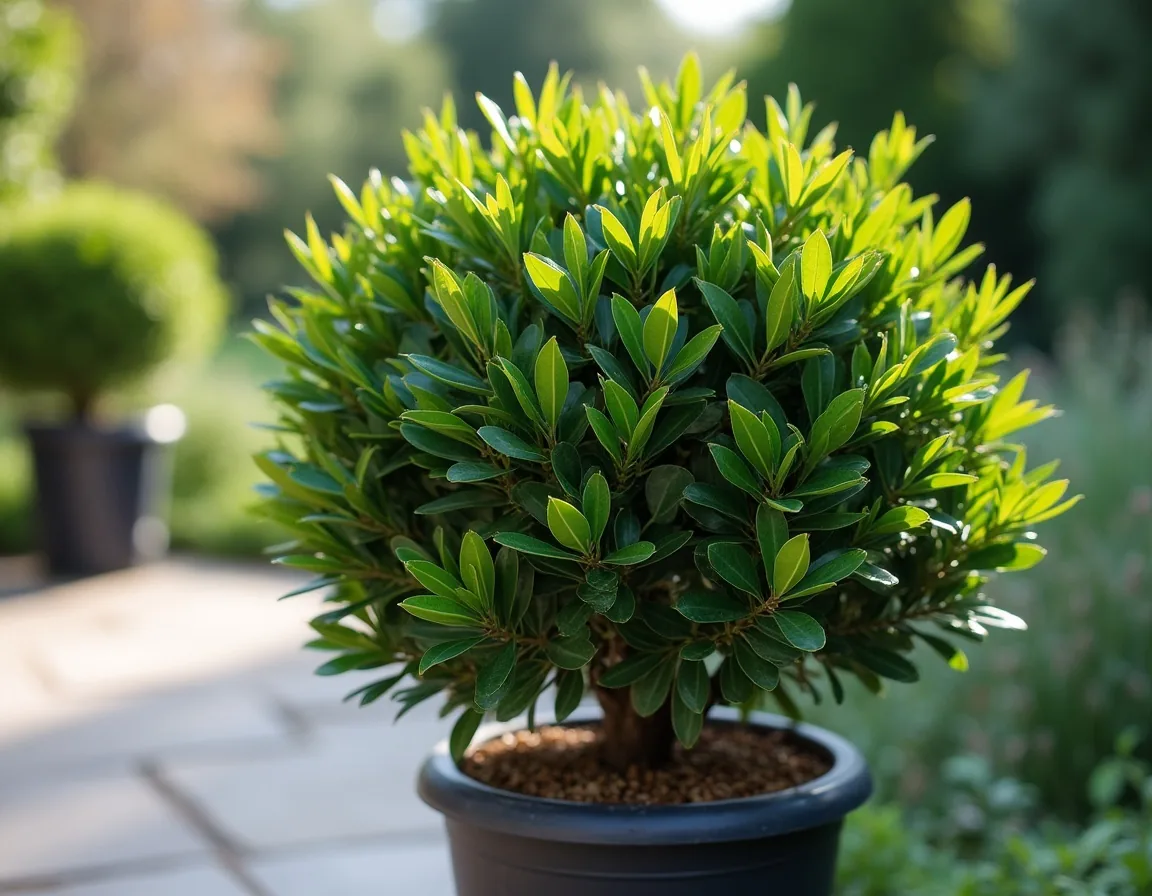
Bay takes clipping well, which is why it is such a popular topiary plant. Trim shaped plants in summer, using secateurs rather than shears so you do not slice through the large leaves and leave them browning at the cut edges. A ball, cone or standard usually needs one or two trims over the season to stay crisp.
An old, leggy or overgrown bay can be cut back hard to rejuvenate it. Do this in mid- to late spring: bay reshoots from old wood, so it recovers, though slowly, and it may look bare for a while before it fills back in.
Harvesting
Because bay is evergreen you can pick leaves whenever you need them, all year round. Take whole leaves or short sprigs from around the plant rather than stripping one spot bare, and a mature plant will easily keep up with a kitchen.
Fresh bay leaves can taste faintly bitter, and the flavour is often considered better once the leaves are dried. Dry a few by laying them flat somewhere warm and airy for a couple of weeks, then store them in a jar out of the light and use them within a year, while they still have scent.
Propagation and common problems
Bay is not the easiest herb to propagate. The usual routes are semi-ripe cuttings taken in late summer or softwood cuttings in early summer, but both can be slow and the success rate is often low, so take several and expect some to fail. Layering, where you peg a low branch down into the soil and leave it to root, is more reliable but can take up to a year.
| Problem | What you see | What to do |
|---|---|---|
| Bay sucker | Thickened, curled, yellow leaf edges at the shoot tips | Prune off affected growth in spring; pick off by hand on small plants |
| Scale insects | Waxy brown bumps on stems and leaf undersides, sticky honeydew | Wipe or scrape off; a strong plant tolerates light infestations |
| Leaf scorch | Brown, crispy leaf edges or whole leaves | Shelter from cold, drying winds and frost; it is the main winter risk |
| Yellow or spotted leaves | Pale, yellowing or spotted foliage, often in a pot | Usually too-wet roots or a pot-bound plant: improve drainage or repot |
Frequently asked questions
Can you grow bay from seed?
You can, but it is slow and unreliable, so almost everyone buys a plant instead. A young potted bay from a nursery settles in quickly, and you can also buy plants ready-trained as a standard or cone if you want the shape straight away.
Can I grow bay in a pot?
Yes, and it is the most popular way to grow it, because a pot keeps the plant small and easy to clip and move. Use a loam-based peat-free John Innes compost with added grit, pot it on every two or three years, water it regularly in summer and feed it through the growing season.
Why are my bay leaves turning brown or yellow?
Brown, scorched leaf edges usually mean cold, drying winds or frost, which is the main winter risk, while yellow or spotted leaves on a potted plant usually point to roots that are too wet or a plant that has outgrown its pot. Improve drainage and shelter, and repot if it is pot-bound.
When should I prune a bay tree?
Trim shaped or clipped bays in summer to keep them neat, using secateurs so you do not cut through the leaves. If you need to cut an old or leggy plant back hard to rejuvenate it, do that in mid- to late spring, and accept it will regrow slowly.
Can you use bay leaves fresh from the plant?
Yes, you can pick and use them fresh all year, as bay is evergreen. Fresh leaves can taste a little bitter though, and many cooks find the flavour better once the leaves are dried, so it is worth drying a small batch to keep in the cupboard.
How we checked this2 sourcesView sourcesHide
Our guides draw on expert bodies like the RHS and Garden Organic, plus experienced growers, read at source. We check every guide against those sources on the date shown, and where advice differs between them, we say so. Garden Plans is published by Limely.
- AuthorityHow to grow bay, Royal Horticultural Society. Checked 22 Oct 2026.
- AuthorityHow to grow bay, Gardeners' World. Checked 22 Oct 2026.