The short answer
Compost is just garden and kitchen waste left to rot down into a free soil improver. The trick is a balance of greens (soft, leafy, wet, like grass and veg peelings) and browns (dry, woody, like cardboard and prunings), kept moist and aired in a bin in a shady corner. Mix them as you add them, turn it now and then, and in anything from a couple of months to a year you will have dark, crumbly compost to spread on your beds.
Why make your own
Home-made compost is the cheapest and best thing you can give your soil. It turns waste you would otherwise throw away into free organic matter that improves the structure of any soil: it helps sandy soil hold on to moisture, opens up heavy clay so it drains, and feeds the worms and microbes that keep soil healthy. Spread as a mulch at least 5cm (2in) thick, it also holds in moisture and smothers weeds.
Greens and browns
Good compost comes down to two kinds of material. Greens are soft and sappy and rich in nitrogen; browns are dry and woody and rich in carbon. You need both: greens get things rotting, browns give the compost body and keep air in the mix.
| Greens (soft, nitrogen-rich) | Browns (woody, carbon-rich) |
|---|---|
| Grass clippings | Cardboard (cereal boxes, toilet roll tubes, egg boxes) |
| Uncooked fruit and vegetable peelings | Torn-up or shredded paper |
| Annual weeds and soft green prunings | Woody prunings and hedge trimmings, chopped or shredded |
| Tea leaves and coffee grounds | Straw and dead plant stems |
| Nettles (not the roots) |
Aim for roughly equal amounts of green and brown by volume, or a little more brown than green. The one thing to avoid is letting any single material take over, especially grass clippings, which turn to a slimy mat on their own. Chop or shred woody stems and cardboard so they break down faster.
Choosing and siting a bin
You can compost in an open heap, but a bin is quicker, tidier and keeps the warmth and moisture in. Any bin works as long as it keeps rain off, holds some warmth, drains, and lets air in: a compact plastic bin for a small garden, or a wooden bay built from pallets for a larger one. Bins smaller than 1 cubic metre are a little slower but still do the job.
Put it in a sheltered spot in partial or full shade, ideally on bare soil. Standing it on soil lets worms and other soil life move in and lets excess water drain away; on a hard surface, just throw in a few spadefuls of soil to get it started. Pick a spot you can reach easily, or you will not use it.
Making the compost
There are two ways to go about it, and you can mix them. Most people compost the slow, easy way; put the effort in and you get compost faster.
- Cool (the easy way): add material whenever you have it. Try to add a good layer at a time (at least 30cm), mixing wet greens with scrunched cardboard and woody bits so it does not pack down. A few twigs at the base help air and drainage. When the bin is full, or you decide to stop, leave it to finish, which can take up to a year.
- Hot (the fast way): gather enough to fill the bin in one go, mix soft and tough material well, and water as you fill. It should heat up within days. When it cools, turn it (mix the outside into the middle), and it will heat again. Repeat while you have the energy.
Turning the heap adds air and speeds everything up, but it is not essential: if the balance is right and you are not in a hurry, it will get there on its own. Keep an eye on moisture and water it in dry spells.
When it is ready, and how to use it
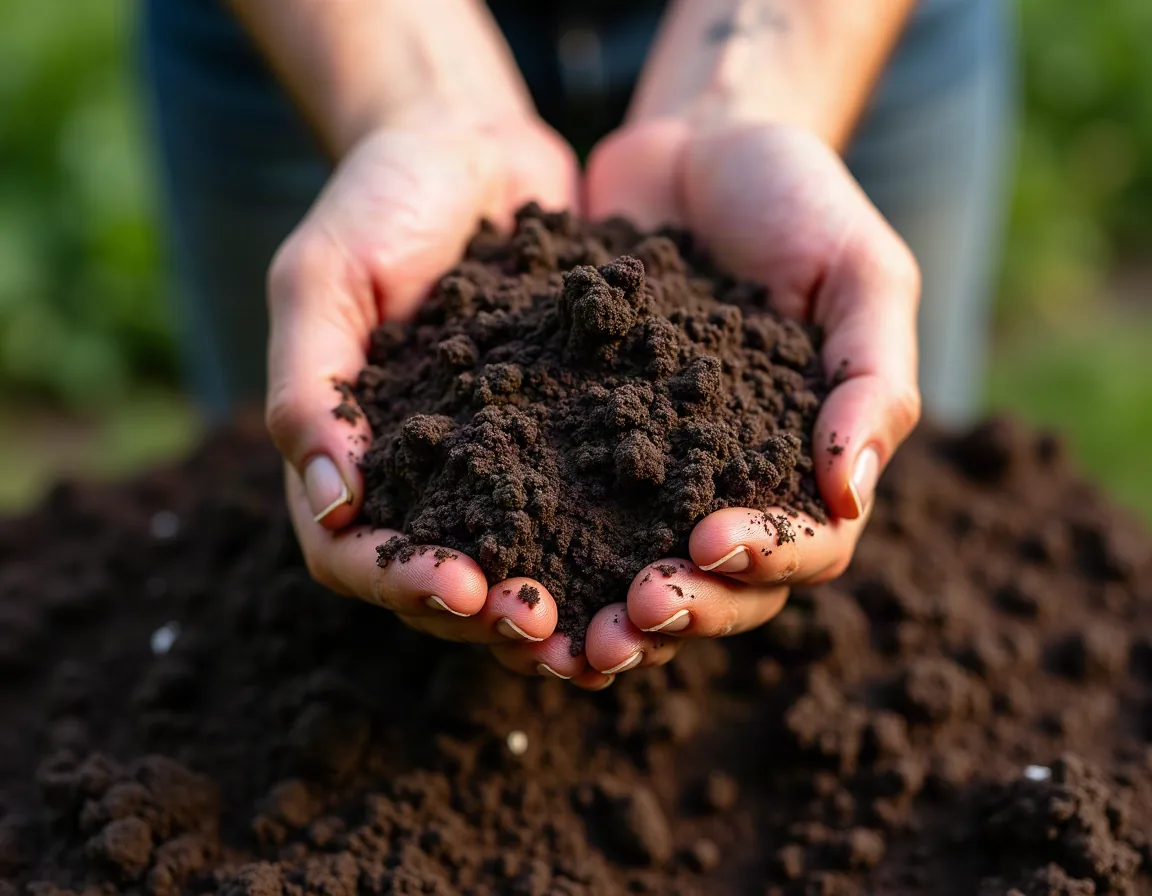
Compost can be ready in as little as 6 to 8 weeks with a hot heap, but six months to two years is more typical. It is faster in warm weather and slows right down over winter. You will know it is done when it is dark brown and crumbly, with a texture like soil and the smell of damp woodland.
Do not worry if it is not perfectly fine: lumpy, stringy or twiggy bits are normal. Sieve it if you like, and toss any big pieces back into the next batch. Leave it to mature for a month or two, then spread it on your beds as a mulch or soil improver.
Fixing a heap that has gone wrong
Composting usually just works, but if it does not, the cause is nearly always the balance of air and moisture. Here is how to read it:
| Problem | Usual cause | Fix |
|---|---|---|
| Wet, slimy and smelly | Too little air and too much water, often too many grass clippings | Cover it from the rain, mix in more brown material, and add grass in thin layers mixed with browns |
| Dry and fibrous, barely rotting | Too little moisture and too much brown material | Water it in dry weather and mix in more green waste |
| Flies | Exposed kitchen waste, or contents too damp | Cover kitchen scraps with garden waste, and check it is not too wet |
Frequently asked questions
What can I not put in a compost bin?
Keep out meat, fish, dairy and cooked food, as they attract rats and mice (unless you have a sealed hot composter). Also leave out cat litter, dog faeces, disposable nappies, and coal or coke ash. Almost anything else that was once a plant will compost.
How long does compost take?
Anything from six to eight weeks with a well-managed hot heap, to six months or two years for a cool heap you add to gradually. The more you turn it and the better the green and brown balance, the faster it goes. It is quicker in warm weather and slower in winter.
Why is my compost slimy and smelly?
It has too much wet green material (often grass) and not enough air. Cover it to keep rain out, mix in plenty of brown material such as cardboard, shredded paper or woody prunings, and add grass in thin layers rather than great heaps.
Do I need a compost accelerator?
No. Accelerators, activators and lime are not needed. A good balance of greens and browns, kept moist and aired, composts perfectly well on its own.
Can I compost in winter?
Yes, you can add to a bin all year round. The process slows down a lot in the cold, so it will take longer to finish, but it keeps going and picks back up as the weather warms.
How we checked this3 sourcesView sourcesHide
Our guides draw on expert bodies like the RHS and Garden Organic, plus experienced growers, read at source. We check every guide against those sources on the date shown, and where advice differs between them, we say so. Garden Plans is published by Limely.
- AuthorityComposting, Royal Horticultural Society. Checked 22 Oct 2026.
- AuthorityHow to make compost, Garden Organic. Checked 22 Oct 2026.
- AuthorityWhat can I compost?, Garden Organic. Checked 22 Oct 2026.