The short answer
Mint is one of the easiest herbs to grow, almost too easy: it spreads fast by underground runners, so the golden rule is to grow it in a pot, not loose in a bed. Give it sun or part shade and moist soil, keep it watered (pots dry out fast), and pick the young shoot tips often to keep it bushy. Cut the whole plant back after it flowers and it will throw up a fresh flush of leaves within weeks. Divide it every few years to keep it healthy.
Why mint needs containing
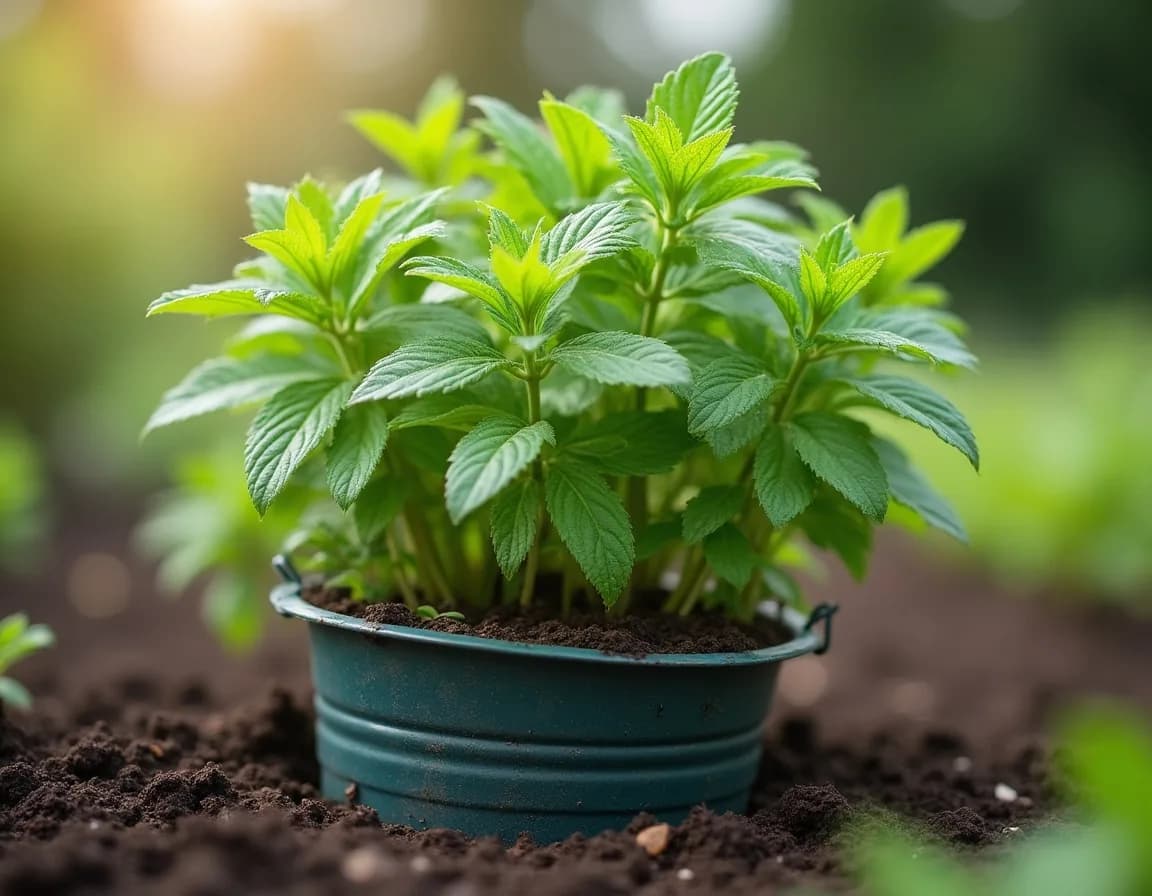
Mint is a vigorous herbaceous perennial. It dies back over winter and returns every spring, living for many years, but it spreads as it goes: underground stems (rhizomes) run outwards and send up new shoots, and left in open ground it will quickly swamp its neighbours.
The simple fix is to grow it in a container. If you want mint in a bed or border, plant it in a bottomless bucket or a pot with large drainage holes and sink that into the soil, leaving the rim slightly proud of the surface so shoots cannot root over the top.
Mint at a glance
| What mint likes | |
|---|---|
| Type | Herbaceous perennial (dies back in winter, regrows each spring) |
| Position | Full sun or partial shade |
| Soil | Rich, moist; tolerates most soil types |
| Grow in | A pot, or a bottomless bucket sunk in a bed, to contain the roots |
| Sow | Indoors in spring at about 20C (usually grown from division or cuttings instead) |
| Harvest | Late spring to autumn |
| Cut back | To about 5cm after flowering, for a fresh flush of leaves |
Planting and position
Mint is happy in full sun or partial shade and, unlike most herbs, prefers soil that stays moist. Plants are sold all year round and can go in at any time, but settle in best planted in spring or autumn. Fill the pot with a peat-free multipurpose or soil-based compost.
It is easiest to buy a young plant, as mint barely comes true from seed and is cheap to propagate. If you do want to sow, scatter seed thinly on damp peat-free seed compost indoors in spring, do not cover it, and keep it bright at around 20C; it germinates in about two weeks. Pot the seedlings on once they have a few leaves.
Watering and cutting back
Because mint likes moisture and lives in a pot, watering is the main job. Check containers regularly through the growing season and keep the compost evenly moist, especially in hot, dry spells; moving the pot to a shadier spot in a heatwave cuts down how often you need to water.
Once mint has finished flowering, cut the whole plant back to about 5cm from the base. It looks drastic, but it triggers a fresh flush of tender young shoots you can start picking again within a few weeks. As it is a herbaceous perennial, it dies down in winter, so tidy away the old faded stems any time from late autumn to early spring.
Harvesting and dividing
Pick mint from late spring to autumn, choosing the young, soft shoot tips for the strongest flavour. The more you pick, the more it produces, and regular picking keeps the plant compact. To keep a few leaves going over winter, bring a pot onto a sunny windowsill; otherwise freeze the leaves (which keeps the flavour best) or dry them. The flowers are edible too, with a milder taste.
Every few years, divide the plant to stop it getting congested: in spring or autumn, cut the rootball into sections, throw away the tired old centre, and repot the healthy outer pieces. Mint also roots very easily from a shoot stood in a jar of water, so it is simple to make more plants or pass some on.
Types of mint to try
There are dozens of mints in a surprising range of flavours. A few reliable, tasty ones:
| Mint | Botanical name | Notes |
|---|---|---|
| Spearmint | Mentha spicata | The classic all-rounder, best if you only have room for one |
| Peppermint | Mentha x piperita | Stronger, cooler flavour, good for tea |
| Moroccan mint | Mentha spicata var. crispa | Sweet and strong, one of the best for tea |
| Apple mint | Mentha suaveolens | Soft, downy leaves with a fruity, mellow flavour |
| Chocolate mint | Mentha x piperita f. citrata | After-dinner-mint flavour, darker stems and leaves |
One word of caution: pennyroyal (Mentha pulegium) is harmful if eaten, so buy named culinary plants from a reputable supplier. Plants sold as catmint or Korean mint are not true mints.
Common problems
Mint is generally healthy and trouble-free, and controlling its spread is usually the only real issue. The one disease to watch for is mint rust, which shows as dusty orange, yellow and black spots on the leaves (it can also affect marjoram and savory); remove and dispose of affected growth. Aphids, the blue mint beetle and mint moth caterpillars may feed on the leaves but rarely do serious harm.
Frequently asked questions
Why should mint be grown in a pot?
Mint spreads fast by underground runners (rhizomes) and will take over a bed, crowding out other plants. Growing it in a pot, or a bottomless bucket sunk into the soil with the rim above the surface, keeps the roots contained while still letting you enjoy the plant.
Does mint grow in sun or shade?
Both. Mint is happy in full sun or partial shade, which makes it more forgiving than most herbs. Unlike sun-loving Mediterranean herbs, it prefers soil that stays moist rather than free-draining and dry.
How do I keep mint bushy and stop it getting leggy?
Pick the young shoot tips regularly, and cut the whole plant back to about 5cm once it has flowered. This encourages a fresh flush of tender leaves within a few weeks. Dividing and repotting every few years also keeps it healthy and vigorous.
Can I grow mint from a supermarket sprig?
Often, yes. Mint roots very easily: stand a healthy shoot in a jar of water and it will usually produce roots within a week or two, after which you can pot it up. Taking cuttings or dividing an existing plant is the most reliable way to grow more.
When can I harvest mint?
Pick mint from late spring through to autumn, before the stems die back for winter. For leaves over winter, bring a pot indoors onto a sunny windowsill, or freeze or dry a batch while the plant is in full growth.
How we checked this1 sourceView sourcesHide
Our guides draw on expert bodies like the RHS and Garden Organic, plus experienced growers, read at source. We check every guide against those sources on the date shown, and where advice differs between them, we say so. Garden Plans is published by Limely.
- AuthorityHow to grow mint, Royal Horticultural Society. Checked 22 Oct 2026.