The short answer
Design a garden in five moves. Start with how you want to use it, then get to know the plot (where the sun falls, your soil, the wind and the views). Measure it and draw it to scale so everything fits, settle the layout (paths, seating and structure) before the planting, and only then choose the plants to match your conditions. Getting it right on paper first is far cheaper than moving a patio later.
Start with how you want to use it
Before you look at a single plant, work out what you want the garden to do. A good design suits both plants and people, so think about who uses the space and how: somewhere to eat outside, a lawn for children or a dog, room to grow vegetables, a quiet corner to sit, screening from neighbours, low maintenance. Jot it all down. This brief is what every later decision is measured against.
Be realistic about upkeep too. Some schemes need far more time than others, so decide early how much maintenance you actually want, and let that shape the plan rather than fighting it later.
Get to know your plot
Take as much time as you can to get to know the garden, ideally across a year, because it changes a lot through the seasons. The RHS suggests looking at four things in particular:
- Sun and aspect. Note where the sun falls in the morning, afternoon and evening. East-facing gets morning sun, west-facing gets afternoon sun; south-facing is the warmest, north the coolest. A hot south-facing wall is a microclimate that can grow tender plants that would struggle elsewhere.
- Soil. Find out your soil type, and watch which areas stay damp and which dry out quickly. The key is to work with what you have (right plant, right place) rather than try to change it completely.
- Wind and climate. Note the prevailing wind direction; wind damages plants and dries out soil, so a hedge or windbreak can help. The UK is warmer and drier in the south east, cooler and wetter in the north west, and cities are warmer and more sheltered than open country.
- Views and privacy. Consider the views out, including from inside (the view from the kitchen window matters), and where you feel overlooked. Remember views change through the year as deciduous plants lose their leaves.
Soil is worth a proper look on its own, since it decides so much of what will grow. Our guide to identifying your soil type walks through the simple tests.
Measure it and draw it to scale
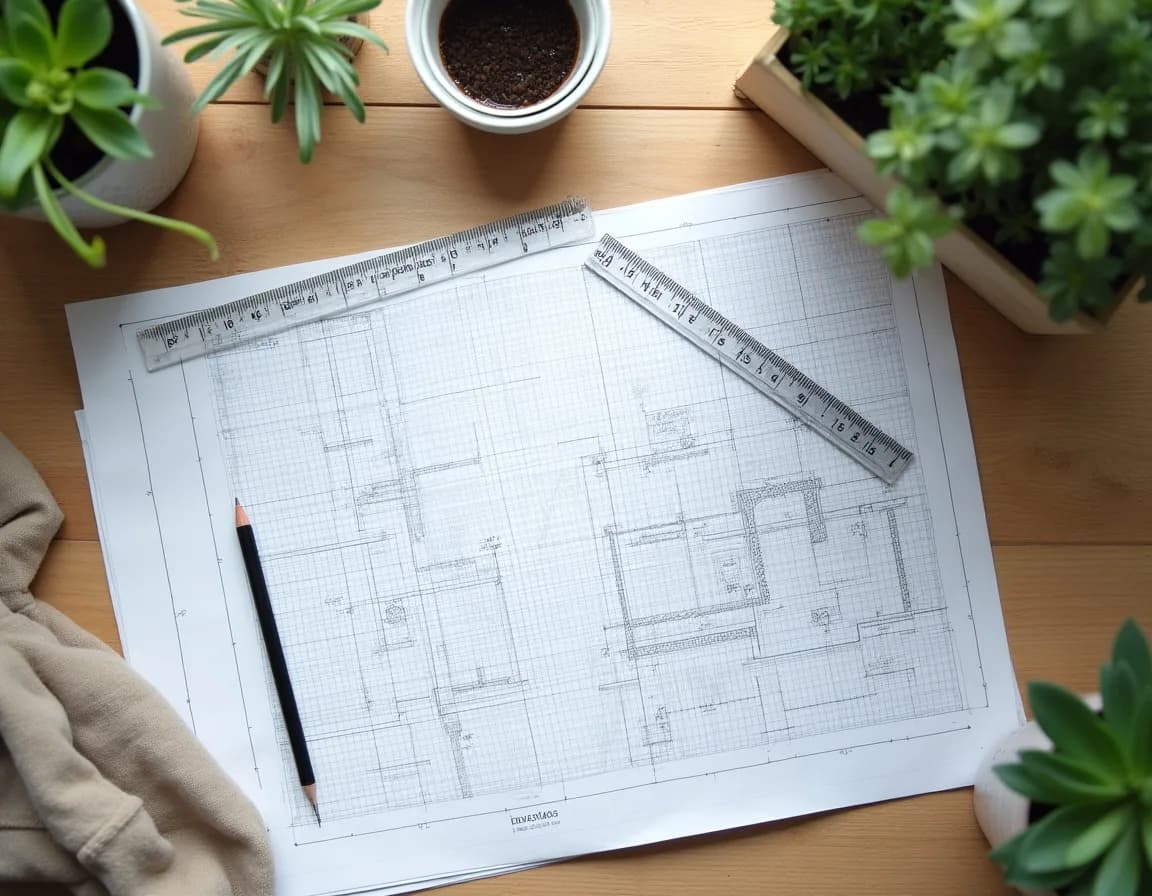
Gardens are rarely the shape we think they are, so a measured, scale drawing is the single most useful thing you can make. It shows what genuinely fits, and it lets you order the right quantities of materials. Crucially, it is far easier and cheaper to change a design on paper (or on screen) than to move a terrace once it is laid.
Sketch the garden roughly first, marking the house, boundaries and fixed features like trees, then measure and log everything on the sketch before transferring it to a scale plan. Two simple surveyor's techniques do most of the work:
- Triangulation fixes a corner or an object (say a tree) by measuring to it from two known points, usually the two back corners of the house.
- Offsets track a curved boundary: peg a straight line and measure out to the curve at regular intervals.
Accuracy matters most close to the house and less further down the garden. Pick a scale from your longest measurement:
| Scale | On paper | Suits |
|---|---|---|
| 1:50 | 2cm on your ruler = 1m in the garden | Small to average gardens |
| 1:100 | 1cm on your ruler = 1m in the garden | Larger gardens |
Settle the layout before the planting
With a scale plan in hand, work out the structure before you think about individual plants. The hard landscaping (paths, patio, lawn shape, where the beds sit) is the most expensive and difficult part to change later, so it is the part most worth getting right on paper.
Place the things you will use first. A sunny corner might suit a table for morning coffee, while a spot that catches the afternoon and evening sun is better for sitting out later in the day. Think about how you will move through the garden, what you want to see from the house, and what you want to screen. Lay tracing paper over your scale plan (or duplicate it in the designer) and try several arrangements.
Plan the planting
Now choose plants to match the conditions you assessed earlier. This is the 'right plant, right place' principle: plants suited to your sun, soil and shelter are more resilient and mean less cost, waste and disappointment. Aim to have something in flower or looking good in every month, so note each plant's season or seasons of interest as you build a list.
To work out how many plants you need, measure each bed and use a rough density guide:
| Plant type | Per square metre |
|---|---|
| Herbaceous perennials | 5 |
| Small shrubs | 3 |
| Large shrubs | 1 |
Then place them on your plan:
- Position the structural and evergreen plants first, then add groups of perennials or small shrubs of the same type, ideally in odd numbers, and repeat those groups along the bed to create flow and tie the scheme together.
- Generally put taller plants towards the back, though a slender, see-through plant can go near the front for a natural look.
- Keep the colour palette limited, especially in a small border: three colours next to each other on the colour wheel, or two opposites, usually look good, and green unifies everything and rests the eye.
- Place hot, bright colours and larger flowers nearest where you view the bed from, with paler, smaller flowers at the far end.
For the detail of putting one bed together, see our guide to planning a vegetable garden if you are growing food, or build the whole layout in the designer.
Try it on paper before you dig
The whole point of a plan is that mistakes are free while they are still drawings. Before you order materials or lift a spade, step back and check the design against the brief you started with: does it do what you wanted, does it suit your conditions, and can you keep on top of it? Move things around until it does.
When you are happy, the scale plan also tells you what to buy: the area of paving, the length of edging, the number of plants per bed. That is the moment designing turns into building, and the time spent planning pays for itself.
Frequently asked questions
Where do I start when designing a garden?
Start with how you want to use the space, not with plants. Write a short brief (seating, lawn, growing, screening, low maintenance), then get to know the plot's sun, soil, wind and views. Only once you have measured and drawn it to scale should you settle the layout and choose planting.
What scale should I draw my garden plan at?
Most average-sized gardens are drawn at 1:50 (where 2cm on your ruler equals 1m in the garden) or 1:100 (where 1cm equals 1m). Pick the scale from your longest measurement so the whole garden fits on the paper. A scale drawing also lets you order the right quantities of materials.
How many plants do I need to fill a border?
Measure the area, then use a rough guide of about five herbaceous perennials, or three small shrubs, or one large shrub per square metre. Drawing the bed to scale and marking plant positions lets you count the numbers you need before you buy.
Should I design the layout or the planting first?
Settle the layout first. Paths, patios and the shape of the lawn and beds are the hardest and most expensive things to change, so fix the structure (the 'bones') on your plan before you choose individual plants to fill the beds.
Do I need to know my soil before designing?
Yes. Your soil type and how freely it drains decide which plants will thrive, so it is worth checking before you plant. Work with the soil you have rather than trying to change it. Our guide to identifying your soil type covers the simple tests.
How we checked this3 sourcesView sourcesHide
Our guides draw on expert bodies like the RHS and Garden Organic, plus experienced growers, read at source. We check every guide against those sources on the date shown, and where advice differs between them, we say so. Garden Plans is published by Limely.
- AuthorityGet to know your garden, Royal Horticultural Society. Checked 22 Oct 2026.
- AuthorityCreating your garden plan, Royal Horticultural Society. Checked 22 Oct 2026.
- AuthorityHow to plan a border, Royal Horticultural Society. Checked 22 Oct 2026.