The short answer
You can grow most vegetables in containers, which makes a patio, doorstep or balcony into a productive plot. The two things that matter most are size and care: use a pot at least 45cm (18in) deep and wide with drainage holes, fill it with peat-free potting compost (not garden soil), and keep it watered and fed, because containers dry out and run out of nutrients far faster than open ground. Start with easy crops like salad leaves, beans, herbs and potatoes.
Why grow in containers
Containers come into their own where soil space is limited: small gardens, patios, doorsteps and balconies. They are easy to move around to catch the sun or shelter, and because you are growing small quantities they are a forgiving way to start. Most of the main growing happens from early spring to autumn, roughly April to October.
Almost any vegetable will grow in a pot if you choose the right container and keep up with watering and feeding. If you are planning a patio or small garden, it is worth laying out where the pots will go in the free garden designer so you can see how much growing space you really have.
Choosing containers
The single most useful rule is to go big. Aim for a container at least 45cm (18in) deep and wide. Smaller pots hold less compost, so they dry out and run short of nutrients quickly, which means far more watering and feeding and more wilting in hot spells. Larger containers are less work, not more.
Whatever you use, it must have drainage holes in the base, so roots never sit in waterlogged compost. Tall, narrow pots tip over easily, so weight the base with stones and stand them somewhere sheltered.
| Material | What to know |
|---|---|
| Terracotta / clay | Looks good but dries out quickly; buy frost-proof, not just frost-resistant |
| Plastic | Lighter and holds moisture better; choose recycled where you can |
| Metal | Durable and frost-proof, but heats up fast in sun and gets very cold in winter |
| Wood | Attractive and can be cheap (crates, half-barrels); line it to slow rot |
| Recycled / compost bags | Almost anything large works; empty compost bags are ideal for potatoes. Make drainage holes |
The right compost
Fill containers with peat-free potting compost, such as a multi-purpose or container compost. This is not the same as the garden compost you make in a heap: potting compost is a blended growing medium, and garden soil on its own compacts and drains poorly in a pot.
For crops that stay in the pot a long time, a peat-free John Innes No 3 (a soil-based compost) is easy to manage. Grow-bag compost is good value for hungry crops like tomatoes. If you garden organically, you can mix well-rotted manure into the lower half of the container (around a fifth by volume) instead of relying on fertiliser.
What to grow
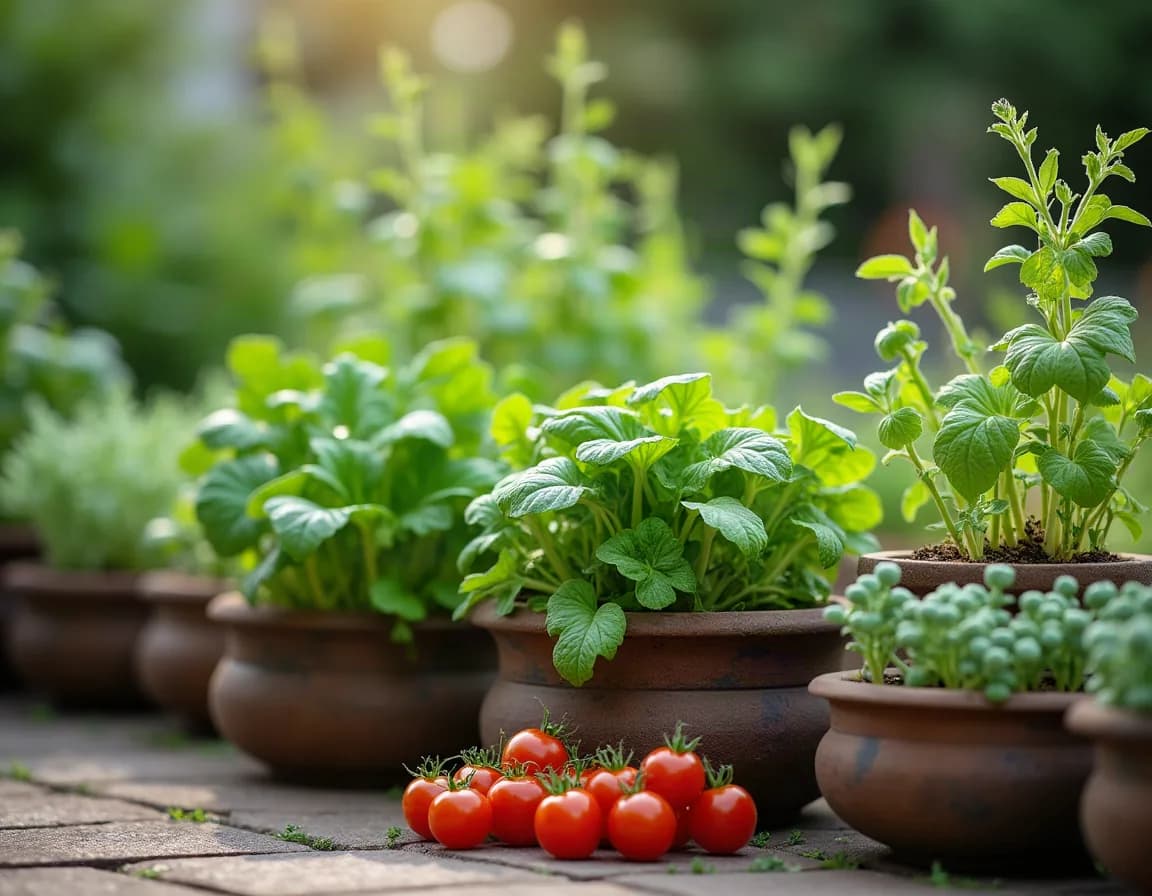
Lean on crops that are quick, compact or cut-and-come-again. Salad leaves, salad onions, radishes, beetroot, herbs, dwarf and runner beans, peas, potatoes, and tomatoes, chillies and peppers all do well in pots. A few favourites, with when to sow and how far apart:
| Crop | When to sow | Spacing |
|---|---|---|
| Salad leaves | From February | 5cm (2in) apart, cut and come again |
| Salad onions | From February | 3cm (1.25in) apart |
| Beetroot | From March | 10cm (4in) apart |
| Carrots | From February | Thinned to 8cm (3in), fleece against carrot fly |
| Lettuce (mini) | From January under cover | 15cm (6in) apart |
| Peas (mangetout) | From March | 15cm (6in) apart |
| Broad beans | From February | 20cm (8in) apart |
| Potatoes (earlies) | From March | One tuber per 30cm (12in) of pot width |
| Tomatoes, chillies, peppers | Plant out early summer | One plant per large pot, after frost |
| Herbs | Spring onwards | A pot each, or grouped by water need |
A good trick in a small space is to follow one crop with another: for example, early lettuces or peas in spring, then salad leaves or beans for late summer in the same pot.
Watering and feeding
This is where container growing is won or lost. With only a small amount of compost to draw on, pots dry out and use up their nutrients much faster than open ground, so they need more attention than plants in a bed.
In winter, do the opposite: keep drainage holes clear, raise pots onto feet or bricks, and remove any saucers so they are not left standing in water, as cold, waterlogged compost rots roots. If frost threatens a tender crop, cover it with horticultural fleece and move the pot to a sheltered spot.
Frequently asked questions
What vegetables grow best in pots?
Salad leaves, salad onions, radishes, beetroot, herbs, peas, dwarf and runner beans, potatoes, and tomatoes, chillies and peppers all do well in containers. Quick and cut-and-come-again crops give the most from a small space.
What size container do I need?
Aim for at least 45cm (18in) deep and wide. Smaller pots dry out and run short of nutrients quickly, so they need much more watering and feeding. Larger containers hold more compost and are less work.
Can I use garden soil in containers?
It is better to use peat-free potting compost. Garden soil compacts and drains poorly in a pot, and is not sterile. Multi-purpose or container compost works for most crops; a soil-based peat-free John Innes No 3 suits longer-term plants.
How often do containers need watering?
Keep the compost evenly moist. In warm weather that often means daily, and up to twice a day for small pots in full sun. Always make sure the container has drainage holes so it never becomes waterlogged.
Do I need to feed vegetables in containers?
Yes. The small amount of compost soon runs out of nutrients, so feed with a general-purpose liquid fertiliser every two weeks through the growing season, or mix a slow-release feed into the compost when you plant.
How we checked this3 sourcesView sourcesHide
Our guides draw on expert bodies like the RHS and Garden Organic, plus experienced growers, read at source. We check every guide against those sources on the date shown, and where advice differs between them, we say so. Garden Plans is published by Limely.
- AuthorityVegetables in containers, Royal Horticultural Society. Checked 22 Oct 2026.
- AuthorityGrowing plants in containers, Royal Horticultural Society. Checked 22 Oct 2026.
- AuthorityHow to grow veg when you're short on space, Royal Horticultural Society. Checked 22 Oct 2026.