The short answer
Every vegetable needs a certain amount of room to reach a good size, and crowding it just gives you small, poor crops. Spacing is given as two numbers: how far apart plants sit along the row, and how far apart the rows are. Use the chart below for common UK veg. If you grow in a bed you can reach into, you can drop the wide rows and space plants equally in a grid at the in-row distance, and fit more into the same ground.
Why spacing matters
Give a plant too little room and it competes with its neighbours for light, water and nutrients. The result is smaller crops, more disease in the damp, still air between crowded plants, and roots that distort, carrots are a classic example, forking and twisting when sown too thickly. Too much room, on the other hand, just wastes space and lets weeds take hold.
The right spacing is a balance, and it is the single easiest thing to get right at planting time. It is worth knowing before you sow, so you can work out how many plants a bed will actually hold.
How to read a spacing figure
Spacing is almost always given as two measurements:
- Within the row: how far apart the plants sit along a line. This is the one that really decides each plant's size.
- Between the rows: the gap from one row to the next. Much of this is about leaving room to walk and to let light and air in, rather than what the plant strictly needs.
For crops you sow directly, like carrots and parsnips, you sow more thickly than the final spacing and then thin the seedlings out to the right distance, removing the weaker ones. Where a figure is a range, the smaller number gives you more, smaller crops and the larger number fewer, bigger ones.
Vegetable spacing chart
Spacings for common UK vegetables, taken from the RHS growing guide for each crop. Seed packets sometimes vary by variety, so check yours, but these are reliable general figures.
| Crop | Along the row | Between rows | Notes |
|---|---|---|---|
| Potatoes (earlies) | 30cm | 60cm | Maincrop potatoes: 37cm in rows 75cm apart |
| Carrots | 5 to 7.5cm | 15 to 30cm | Thin seedlings to this spacing; overcrowding distorts the roots |
| Beetroot | 10cm | 30cm | Or sow clusters 15cm apart for smaller, baby roots |
| Onions (sets) | 10cm | 25 to 30cm | Space 15cm apart for larger bulbs |
| Leeks | 15 to 20cm | 30cm | 10cm apart for baby leeks |
| Parsnips | 15cm | 30cm | Sow in threes at each spacing, then thin to the strongest |
| Lettuce (hearting) | 30cm | 30cm | Loose-leaf types need only 15cm apart |
| Peas | 7.5cm | equal to the plant's height | Often grown in double or triple rows with supports |
| Broad beans | 15 to 23cm | 45cm (single rows) | Or double rows 23cm apart, with 60cm between each pair |
| Runner beans (climbing) | 15 to 30cm | up canes or a wigwam | Dwarf runner beans: 30cm apart in rows 50cm apart |
| Tomatoes (outdoor) | 45 to 60cm | 45 to 60cm | Depends on eventual size; check the variety |
| Courgettes | 90cm | 90cm | They sprawl, so give each plant plenty of room |
Spacing in beds, not just rows
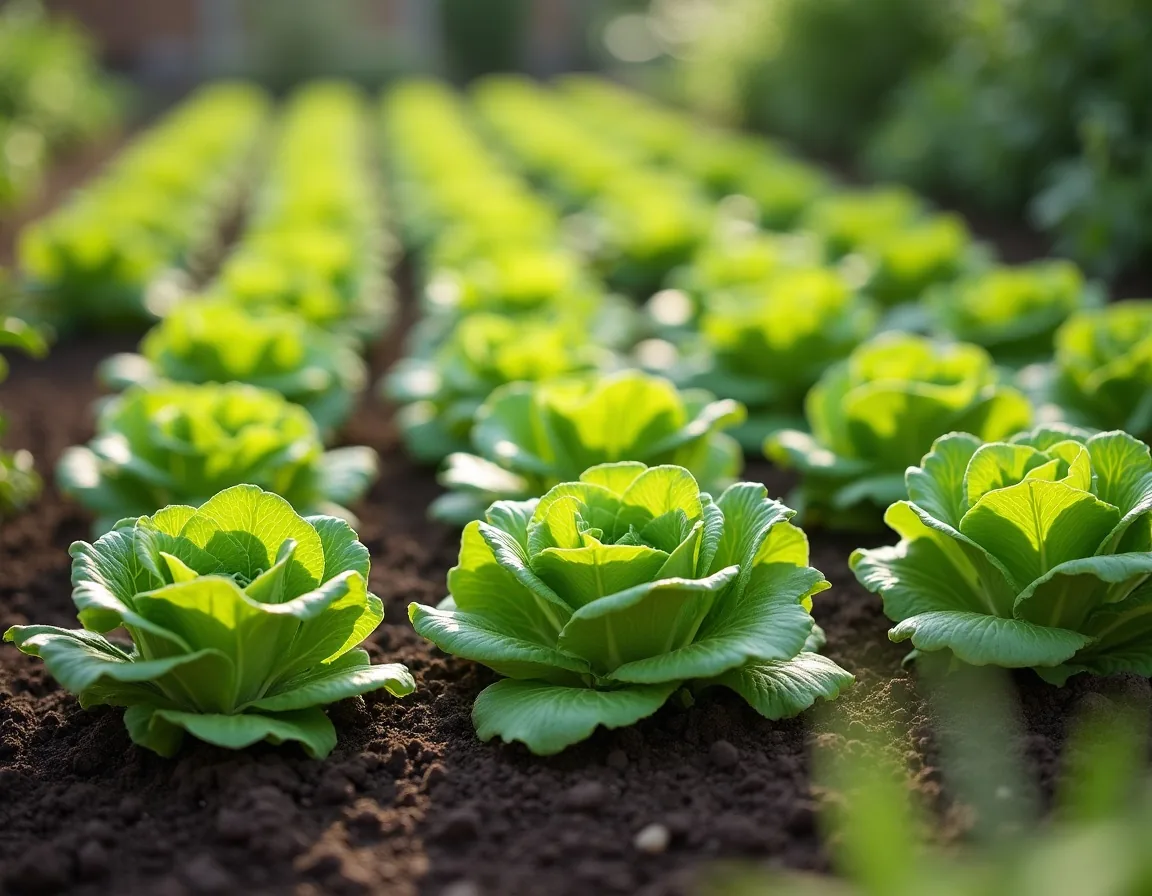
The traditional row spacings above assume you walk between the rows. If you grow in a bed narrow enough to reach into from the paths, you never tread on the soil, so you do not need those wide walking gaps. Instead you can space plants equally in all directions, in a grid, using the within-the-row distance.
So lettuces that would sit in rows 30cm apart can instead go 30cm apart each way across the bed, and you fit noticeably more in. The leaves meet as the plants grow, which shades out weeds and keeps moisture in.
Once your beds are spaced and planted, it pays to move each group of crops around the plot from year to year. See our crop rotation guide for why and how, and our guide to planning a vegetable garden for siting and sizing the beds in the first place.
Frequently asked questions
What do the two spacing numbers mean?
The first is how far apart plants sit along the row, which mostly decides each plant's final size. The second is the gap between rows, which is largely about room to walk and to let in light and air. In a bed you can reach into, you can use the in-row spacing in both directions.
Can I plant closer together in a raised bed?
Yes. Because you work from the paths and never compact the soil, you can drop the wide walking rows and space plants equally in a grid at the in-row distance. That fits more plants in, and the foliage soon closes over to suppress weeds and hold moisture.
What happens if I plant vegetables too close together?
They compete for light, water and nutrients, so you get smaller crops. Crowding also traps damp, still air that encourages disease, and root crops like carrots can fork or distort. Thin seedlings out to the recommended spacing to avoid it.
Do I need to thin seedlings?
For directly sown crops such as carrots, beetroot and parsnips, yes. You sow more thickly than the final spacing to allow for seeds that do not come up, then remove the weaker seedlings so the rest sit at the right distance.
How many plants will fit in my bed?
Divide the bed by the crop's spacing. At 30cm each way, a 120cm wide bed holds four plants across; a 120cm by 240cm bed holds about 32 lettuces. Sketching the grid to scale, on paper or in the designer, makes this easy to work out before you sow.
How we checked this12 sourcesView sourcesHide
Our guides draw on expert bodies like the RHS and Garden Organic, plus experienced growers, read at source. We check every guide against those sources on the date shown, and where advice differs between them, we say so. Garden Plans is published by Limely.
- AuthorityHow to grow potatoes, Royal Horticultural Society. Checked 22 Oct 2026.
- AuthorityHow to grow carrots, Royal Horticultural Society. Checked 22 Oct 2026.
- AuthorityHow to grow beetroot, Royal Horticultural Society. Checked 22 Oct 2026.
- AuthorityHow to grow onions, Royal Horticultural Society. Checked 22 Oct 2026.
- AuthorityHow to grow leeks, Royal Horticultural Society. Checked 22 Oct 2026.
- AuthorityHow to grow parsnips, Royal Horticultural Society. Checked 22 Oct 2026.
- AuthorityHow to grow lettuces, Royal Horticultural Society. Checked 22 Oct 2026.
- AuthorityHow to grow peas, Royal Horticultural Society. Checked 22 Oct 2026.
- AuthorityHow to grow broad beans, Royal Horticultural Society. Checked 22 Oct 2026.
- AuthorityHow to grow runner beans, Royal Horticultural Society. Checked 22 Oct 2026.
- AuthorityHow to grow tomatoes, Royal Horticultural Society. Checked 22 Oct 2026.
- AuthorityHow to grow courgettes, Royal Horticultural Society. Checked 22 Oct 2026.