The short answer
Parsley is easy once it is up, but slow to germinate, so sow it in moist, fertile soil in sun or light shade and give it up to a month. Sow a small batch every few weeks for leaves all summer, keep it watered (it hates drying out), and pick the outer stems regularly to keep new ones coming. It is a biennial, so most people treat it as an annual and resow each year.
Flat or curly?
Parsley is a biennial, which means it makes leaves in its first year and flowers in its second. As a herb we treat it as an annual, picking through the first year and resowing, because once it runs to flower the leaves turn bitter and stop coming. There are two types to choose between:
| Type | What it is like |
|---|---|
| Flat-leaved (Italian) | Stronger flavour, usually taller; the cook's choice for most dishes |
| Curly-leaved | Milder flavour, shorter and decorative, good as an edging |
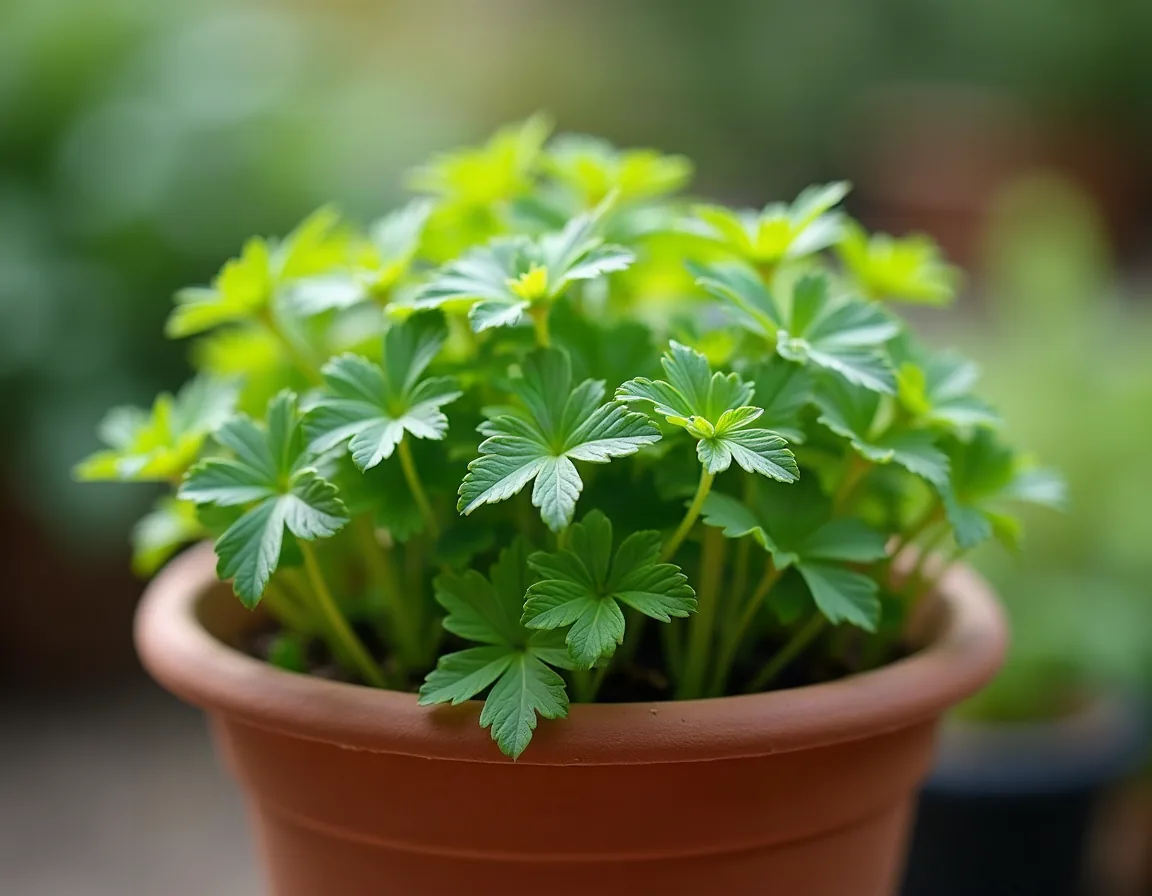
Both grow well in the ground or a pot, in sun or partial shade, and the low curly kinds make a neat edging for a bed.
Sowing (and the waiting game)
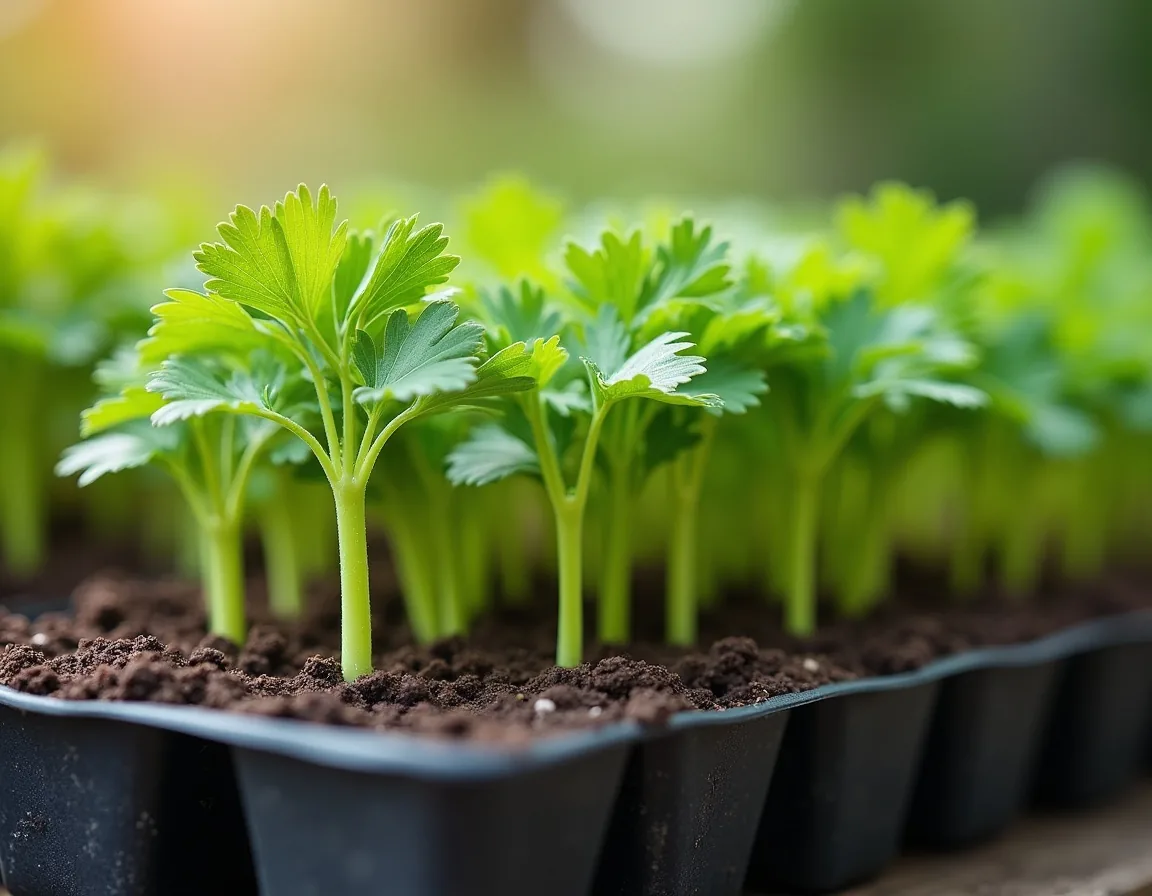
The easiest way is to sow outdoors, straight where the plants are to grow, from mid-spring to late summer: parsley dislikes having its roots disturbed, so direct sowing avoids a check to growth. You can also sow indoors in modules from early spring for an earlier crop. Sow thinly about 1cm deep, keep the soil moist, and thin seedlings once they are up.
Sow a short row or a few modules every few weeks rather than all at once, so you have a steady supply rather than a glut. In a pot, use one at least 25cm (10in) wide and deep filled with peat-free compost.
At a glance
| Type | Biennial, grown as an annual |
| Position | Full sun or partial shade |
| Soil | Fertile, moisture-retentive, well-drained |
| Sow indoors | Early spring, in modules |
| Sow outdoors | Mid-spring to late summer, where it is to grow |
| Germination | Slow, up to a month or more (within ~6 weeks) |
| Spacing | 15-30cm apart; rows 20-30cm apart |
| Height | 30-60cm depending on variety |
| Harvest | Late spring to autumn |
Watering and care
Parsley wants soil that stays moist but never waterlogged. Water young plants to get them going and keep an eye on them in hot, dry spells. Plants in pots need the most attention, as the compost dries out fast, so check them regularly and keep them evenly damp; moving a pot into light shade in a heatwave saves a lot of watering.
In the ground parsley needs no feeding. A container plant that looks tired can have a balanced liquid feed every few weeks through the growing season. Snip off any lower leaves that yellow to keep plants fresh.
Harvesting and winter
Pick from late spring right through to autumn. Take a few leafy stems from the outside of the plant, cutting near the base rather than pinching leaves off the top, which keeps the plant bushy and productive. The more you pick, the more it makes.
Parsley dies down over winter outdoors. To keep leaves coming, bring a pot onto a bright windowsill or into a greenhouse, or cover plants in the ground with a cloche. It is not worth holding plants into a second year for leaves, as they bolt, though you can leave one to flower for the pollinators and to collect seed. Spare leaves freeze well chopped into ice-cube trays.
Common problems
Parsley is a close relative of carrots and celery, so it shares some of their pests. Watch for carrot fly and celery leaf-mining fly, and for aphids on soft growth. Slugs and snails are fond of the leaves, which is another reason a pot up off the ground can be easier.
One thing to avoid: do not plant out the pots of parsley sold in supermarkets. They are packed with overcrowded seedlings meant for a quick indoor snip, and bringing shop-bought herbs into the garden carries a small risk of introducing disease.
Frequently asked questions
Why is my parsley taking so long to come up?
Parsley is naturally slow to germinate, often taking a month or more. Keep the soil or compost consistently moist and warm, and seedlings should appear within about six weeks. Do not dig the area over assuming it has failed.
Is flat-leaved or curly parsley better?
Flat-leaved (Italian) parsley has a stronger flavour and is usually the cook's choice; curly parsley is milder and more decorative, and the low mounds make a good edging. Both are grown in exactly the same way, so pick by taste and looks.
Does parsley grow better in sun or shade?
It grows in both. Full sun is fine if you keep it watered, but a spot in partial shade keeps the soil moister and makes the plant less likely to bolt, so light shade is often the easier choice.
Can I grow parsley in a pot?
Yes, parsley grows well in containers. Use a pot at least 25cm wide and deep with peat-free compost, keep it evenly moist (pots dry out quickly), and you can bring it onto a sunny windowsill to crop into winter.
Should I keep parsley for a second year?
Not for its leaves. Parsley is a biennial, so in its second year it runs to flower and seed and the leaves turn bitter. Treat it as an annual and resow each year, though you can let a plant flower to feed pollinators and collect seed.
How we checked this2 sourcesView sourcesHide
Our guides draw on expert bodies like the RHS and Garden Organic, plus experienced growers, read at source. We check every guide against those sources on the date shown, and where advice differs between them, we say so. Garden Plans is published by Limely.
- AuthorityHow to grow parsley, Royal Horticultural Society. Checked 22 Oct 2026.
- AuthorityHow to grow parsley, Gardeners' World. Checked 22 Oct 2026.