The short answer
Basil is tender, so it needs more warmth than most herbs. Sow it indoors from March at around 20C, grow it on a sunny windowsill or in a greenhouse, and only move it outside in early summer once nights are reliably warm. It does best in a pot in the warmest, most sheltered spot you have. Water in the morning (it hates sitting wet overnight), and pinch out the shoot tips regularly to keep it bushy and stop it flowering.
Basil at a glance
Basil is one of the most useful herbs to grow, but it is not hardy in the UK, so it is treated as a warmth-loving annual. Get the warmth and drainage right and it is easy and generous.
| Basil | |
|---|---|
| Type | Tender annual herb (not hardy in the UK) |
| Position | Warm, sheltered, full sun; often best in a pot or greenhouse |
| Sow indoors | March to July, at about 20C (68F) |
| Sow or plant outdoors | Early summer only, once nights stay above 10C |
| Spacing | At least 10cm (4in) apart |
| Height | 20-50cm (8-20in) |
| Harvest | Shoot tips through summer |
Sowing
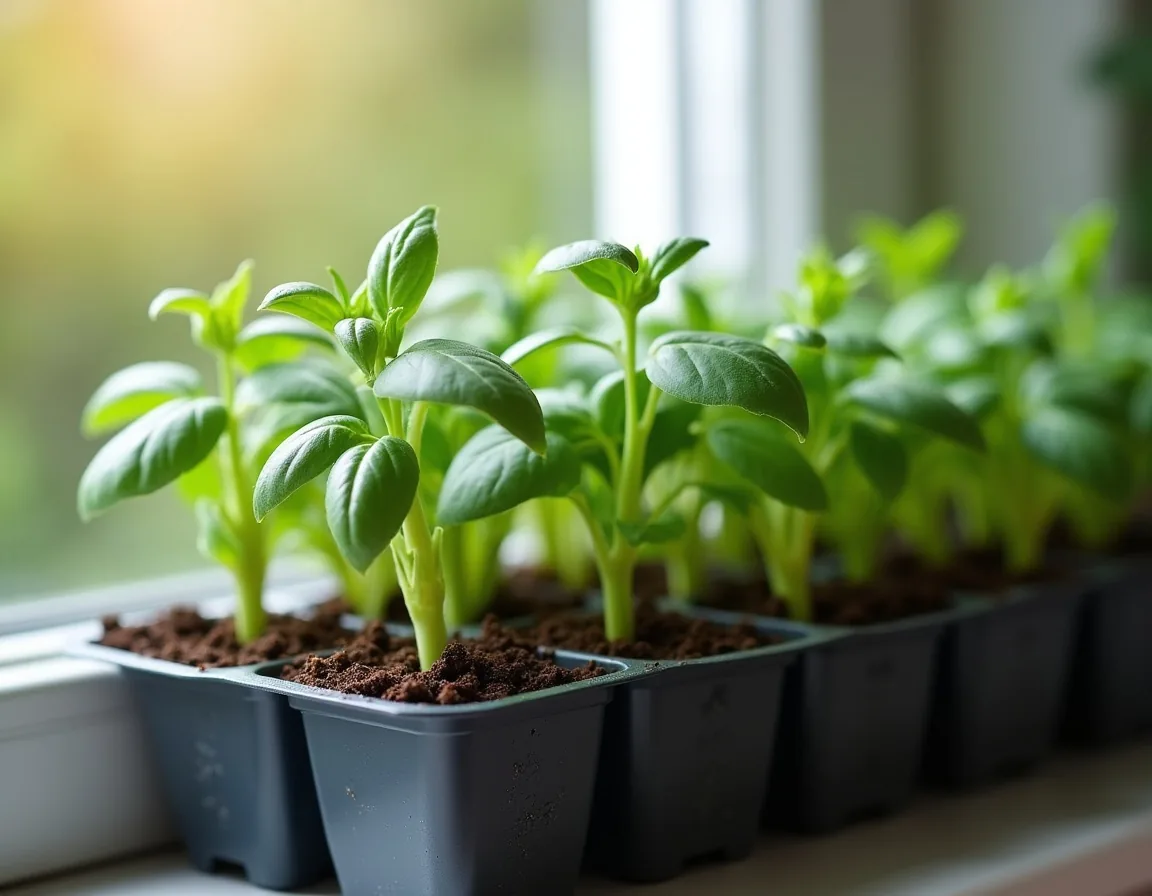
Basil is easy from seed and you will get the widest choice of flavours that way. Starting indoors gives a longer, more reliable season:
- Sow from March to July, thinly on the surface of damp peat-free seed compost in small pots or modules. Do not bury the seed.
- Cover with a propagator lid or clear bag and keep at about 20C (68F), somewhere bright and warm like a windowsill.
- Sow a small batch every few weeks for a steady supply right through summer.
- Once seedlings have a few leaves, pot them on into their own 7.5cm (3in) pots. Water carefully: wet, overcrowded seedlings are prone to damping off.
You can sow outdoors too, but only in warm areas and only from early summer, once night temperatures stay above 10C. Even then, a pot of free-draining compost usually does better than open ground.
Where to grow it
Basil wants it warm, bright and sheltered, the sunniest corner you have, a greenhouse, or an indoor windowsill. In cooler parts of the country a greenhouse or a pot by a sunny wall is the most reliable way to grow it well.
Grow it in a container at least at least 20cm (8in) wide and deep, filled with peat-free multi-purpose compost, or plant into well-drained soil once the weather is warm. Space plants at least 10cm (4in) apart. Harden off indoor-raised plants before they go outside.
Watering and care
Keep the compost evenly moist but never waterlogged. Pots and greenhouse plants need regular watering in summer, but basil resents sitting wet, so water in the morning so the roots are not cold and soggy overnight.
In the ground basil rarely needs feeding. In a pot it can run short, so give an organic balanced liquid feed to keep the leaves coming. Avoid a potassium-rich tomato feed, which pushes it to flower.
Pinching out and harvesting
Pick basil often, it is the secret to a bushy, productive plant. Nip out the shoot tips, cutting just above a pair of leaves, and the plant branches out below. Taking a little and often from several plants beats stripping one bare.
Basil starts trying to flower in mid- to late summer. Remove the flower stems as they appear to keep the leaves tasting their best, though it is worth letting a spare plant bloom, as the flowers are rich in nectar for bees and are edible themselves. Basil loses its flavour when cooked, so scatter the leaves over hot dishes right at the end.
Types to try
Sweet basil is the all-rounder, but it is worth growing a couple of others for different dishes and a bit of colour:
| Type | Good for |
|---|---|
| Sweet (Genovese) basil | The classic for pesto, salads and tomato dishes |
| Greek / bush basil | Small-leaved, compact and neat, good in pots |
| Thai basil | Aniseed flavour for Asian cooking; purple flower spikes |
| Purple basil | Deep purple leaves for colour on the plate and in the garden |
| Lemon and lime basil | Citrus-scented leaves for fish, salads and drinks |
Common problems
- Slugs and snails love basil seedlings; keeping plants raised in pots makes them easier to protect.
- Damping off and grey mould strike cold, wet, crowded seedlings. Sow thinly, water in the morning and keep the air moving.
- Cold is the biggest killer: keep plants indoors until after the last frost, and bring them in or cover them if you want to stretch the season into autumn.
- Aphids can gather on soft tips; rub them off or rinse them away.
Frequently asked questions
Why does my basil keep dying?
Usually cold or overwatering. Basil is tender and hates cold, wet roots, so keep it warm, grow it in free-draining compost in a sunny spot, and water in the morning rather than leaving it damp overnight. Supermarket pots often fail because they are overcrowded; split and repot them to help them last.
Can I grow basil outside in the UK?
Yes, but only in summer and in a warm, sheltered, sunny spot, ideally in a container. Wait until early summer when nights stay above 10C. In cooler areas a greenhouse or a sunny indoor windowsill gives much more reliable results.
How do I stop basil flowering?
Pinch out the growing tips regularly and remove any flower stems as soon as you see them. Keeping the plant well watered and not too hot and dry also delays flowering. Once a plant flowers heavily the leaves lose flavour, so keep picking.
How do I harvest basil so it keeps growing?
Take the shoot tips, cutting just above a pair of leaves, rather than stripping individual leaves from the stem. The plant then branches out and becomes bushier. Pick a little from several plants regularly through summer.
When should I sow basil?
Sow indoors from March to July at around 20C for the longest season. Sow small batches every few weeks for a continuous supply. Only sow or plant outdoors from early summer, once night temperatures are reliably above 10C.
How we checked this2 sourcesView sourcesHide
Our guides draw on expert bodies like the RHS and Garden Organic, plus experienced growers, read at source. We check every guide against those sources on the date shown, and where advice differs between them, we say so. Garden Plans is published by Limely.
- AuthorityHow to grow basil, Royal Horticultural Society. Checked 22 Oct 2026.
- AuthorityHow to grow basil, Gardeners' World. Checked 22 Oct 2026.