The short answer
Sage is a hardy evergreen perennial, so unlike basil it lives for years and you pick it right through winter. It wants full sun and, above all, free-draining soil: wet feet in winter is what kills it, not cold. The quickest start is to buy a plant rather than sow, since seed-raised sage takes a year to get going. Give it room (at least 30cm (12in) apart), water it only while it settles in, and prune it lightly each spring, never into bare old wood, to keep it leafy instead of straggly.
Sage at a glance
Sage is one of the easiest herbs to keep going once it is in the right spot, because it is a tough evergreen shrub rather than a fussy annual. Get the drainage and the sun right and it largely looks after itself.
| Sage | |
|---|---|
| Type | Hardy evergreen perennial sub-shrub (Salvia officinalis) |
| Position | Full sun, sheltered, in free-draining soil that never waterlogs |
| Plant | Buy young plants in spring or early summer; seed is slow |
| Spacing | At least 30cm (12in) apart |
| Height | 30-90cm (1-3ft), depending on the variety |
| Harvest | Leaves all year; best flavour from spring and summer growth |
Where to grow it
Sage comes from the dry, sunny Mediterranean, so it wants the warmest, brightest, most sheltered spot you have and soil that drains freely. The single thing that kills established sage in this country is not cold, it is sitting in cold, wet soil over winter, which rots the roots.
If your ground is heavy, work plenty of grit into the planting hole, or grow it in a raised bed or a pot instead. In a container, use one at least 30cm (12in) wide and deep with drainage holes, filled with peat-free soil-based compost mixed with up to 25% horticultural grit by volume. Move pots to a sheltered spot for winter so the roots do not sit sodden.
Buying and planting
Buy a plant. It is the honest shortcut here: the perennial culinary sage most people want is slow and unreliable from seed, taking at least a year to reach a useful size, so a young plant from spring or a larger 2 to 3 litre pot gets you picking the same season. You will also get a named variety you can taste before you buy.
- Plant in spring or early summer so it has the whole season to settle in before winter.
- Space plants at least 30cm (12in) apart, as they spread as much as they grow tall.
- Set the plant so the top of the rootball is only lightly covered with soil, not buried deep.
If you do want to sow, start seed indoors on a warm windowsill in spring; it germinates in about two weeks. Just be patient, as it will not earn its keep until the following year.
Watering and care
Water a newly planted sage during dry spells through its first summer while the roots spread. After that, a plant in the ground is genuinely drought-tolerant and needs no extra watering in all but the longest dry spells. Pots dry out faster, so keep the compost slightly moist but never saturated.
Feeding in the ground is unnecessary and counterproductive. A container plant over a year old is the only one worth feeding: a sprinkling of general-purpose granular feed in late spring or early summer is plenty.
Pruning and harvesting
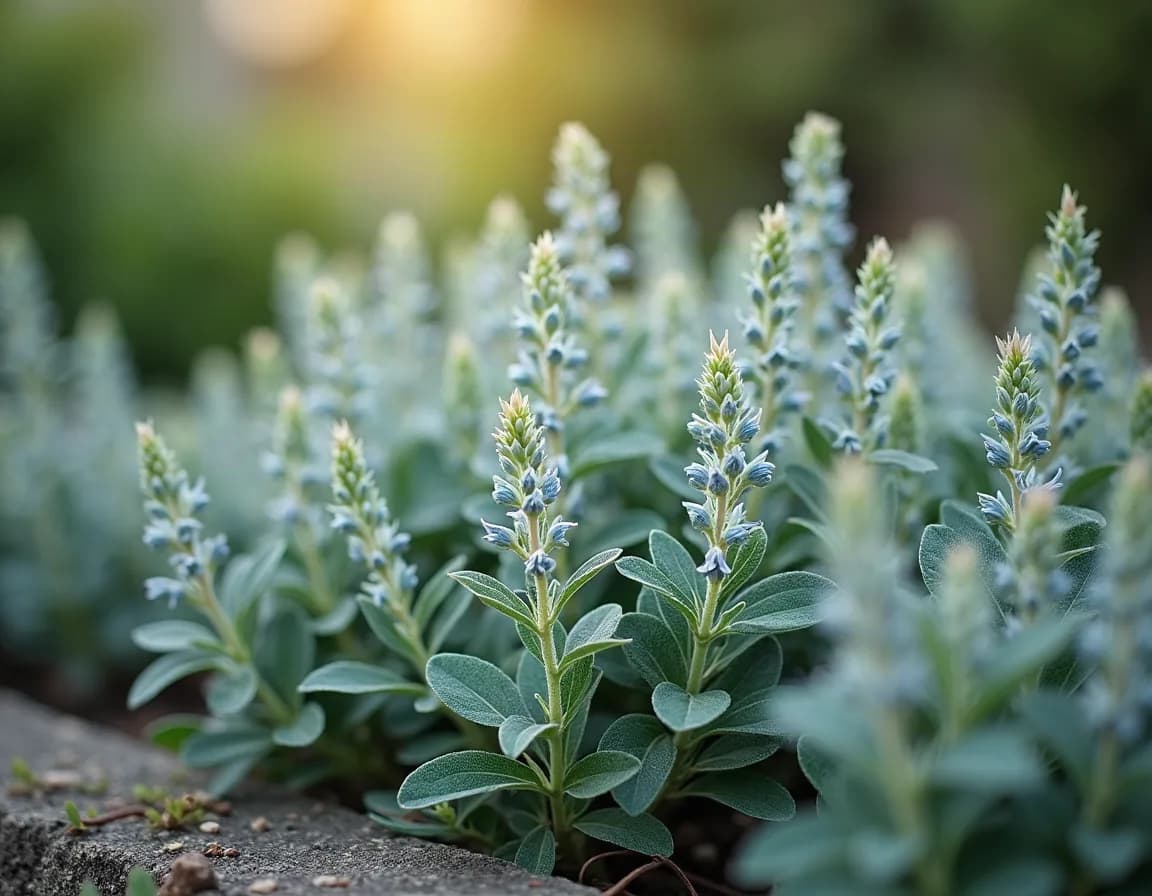
One light prune a year is what keeps sage looking good. In mid- to late spring, trim the plant over to keep it compact and push out fresh, leafy growth from lower down. Gardeners' World suggests a gentle prune after flowering instead; either works, as long as the cut is light.
Because it is evergreen you can pick leaves all year, though the fresh spring and summer growth has the best flavour. Pick before the flowers open, ideally in late morning or early evening when the aromatic oils are most concentrated. Dry sprigs in a warm, dark, airy place, or freeze chopped leaves in ice-cube trays for winter cooking.
Types to try
Common sage is the one for the kitchen, but the coloured-leaf forms earn their place in a border and still cook perfectly well:
| Type | Good for |
|---|---|
| Common sage (the species) | The all-rounder for cooking; grey-green leaves, pale-blue flowers |
| 'Purpurascens' AGM | Purple-grey foliage; good flavour and looks the part in a border |
| 'Icterina' AGM | Yellow and green variegated leaves; bright and compact |
| 'Berggarten' AGM | Large grey-green leaves; broad, low and leafy |
Propagate any of them from softwood cuttings in late spring or early summer: a soft shoot tip, cut just below a leaf joint, roots quickly in damp sharp sand on a sunny windowsill. You can also layer a low stem into the soil in spring or autumn and lift the rooted piece later.
Common problems
- Waterlogging is the real danger: sage rots in cold, wet soil over winter. Sort the drainage and most other problems never arise.
- Woodiness comes with age. Prune lightly each spring and replace the plant after six or seven years rather than cutting it hard.
- Leafhoppers, capsid bugs and red spider mite can mottle or discolour the leaves. A blast of water or a soap-based organic spray usually sorts them.
- Rosemary beetle and powdery mildew turn up too, but the RHS notes these rarely cause serious harm, so control is not usually needed.
Frequently asked questions
Is sage a perennial or do I replant it each year?
It is a hardy evergreen perennial, so one plant lives for years and you can pick leaves right through winter. It does get woody and straggly after six or seven years, so take cuttings and start a fresh plant before the old one gives out.
Why is my sage dying or going black?
Almost always wet roots rather than cold. Sage rots if it sits in cold, waterlogged soil over winter. Improve drainage with grit, move containers somewhere sheltered for winter, and only water established plants in the longest dry spells.
Should I grow sage from seed or buy a plant?
Buy a plant. The perennial culinary sage most people want is slow and unreliable from seed, taking at least a year to reach a useful size. A young plant lets you pick the same season and choose a named variety by flavour.
When and how do I prune sage?
Prune lightly once a year in mid- to late spring, or gently after flowering, to keep it compact and leafy. Never cut back into bare old wood, as thick leafless stems may not reshoot. Always prune into growth that still carries leaves.
Can I pick sage in winter?
Yes. Sage is evergreen, so you can harvest leaves all year round. The fresh spring and summer growth has the best flavour, and leaves picked before the plant flowers, in late morning or early evening, carry the most aromatic oil.
How we checked this2 sourcesView sourcesHide
Our guides draw on expert bodies like the RHS and Garden Organic, plus experienced growers, read at source. We check every guide against those sources on the date shown, and where advice differs between them, we say so. Garden Plans is published by Limely.
- AuthorityHow to grow sage, Royal Horticultural Society. Checked 22 Oct 2026.
- AuthorityHow to grow sage, Gardeners' World. Checked 22 Oct 2026.