The short answer
Herbs grow beautifully in pots, but the one decision that makes or breaks them is not planting everything together. Keep dry-loving Mediterranean herbs (rosemary, thyme, sage, oregano) in gritty compost in their own pots, and thirsty leafy herbs (mint, parsley, chives, basil, coriander) in richer compost in separate pots, because they want opposite amounts of water. Use a pot at least 20cm deep with drainage holes, and remember pots dry out and run short of food much faster than open ground, so they need watching.
What size pot does each herb need?
Go bigger than feels necessary. A small pot holds little compost, so it dries out and runs short of food fast, which means constant watering and feeding. The sizes below are the sensible minimums: more room is almost always easier, not harder.
| Herb | Minimum pot | Notes |
|---|---|---|
| Mediterranean herbs (sage, thyme, oregano, marjoram, winter savory) | At least 20cm (8in) deep | Gritty, free-draining compost and plenty of drainage holes |
| Rosemary | At least 30cm (1ft) wide and deep | A bigger shrub, so it needs a bigger pot than most herbs |
| Thirsty leafy herbs (mint, parsley, chives, basil, coriander) | At least 20cm (8in) wide and deep | Richer, moisture-retentive compost; water more often than Mediterranean herbs |
| Potting on young plants | 9cm (3.5in) pots | Pot mail-order plug plants on into their own pots before growing on |
Whatever you use, it must have drainage holes in the base. For a full rundown of siting, which herbs to grow and planning the space, see the guide to creating a herb garden.
Why keep thirsty and Mediterranean herbs in separate pots?
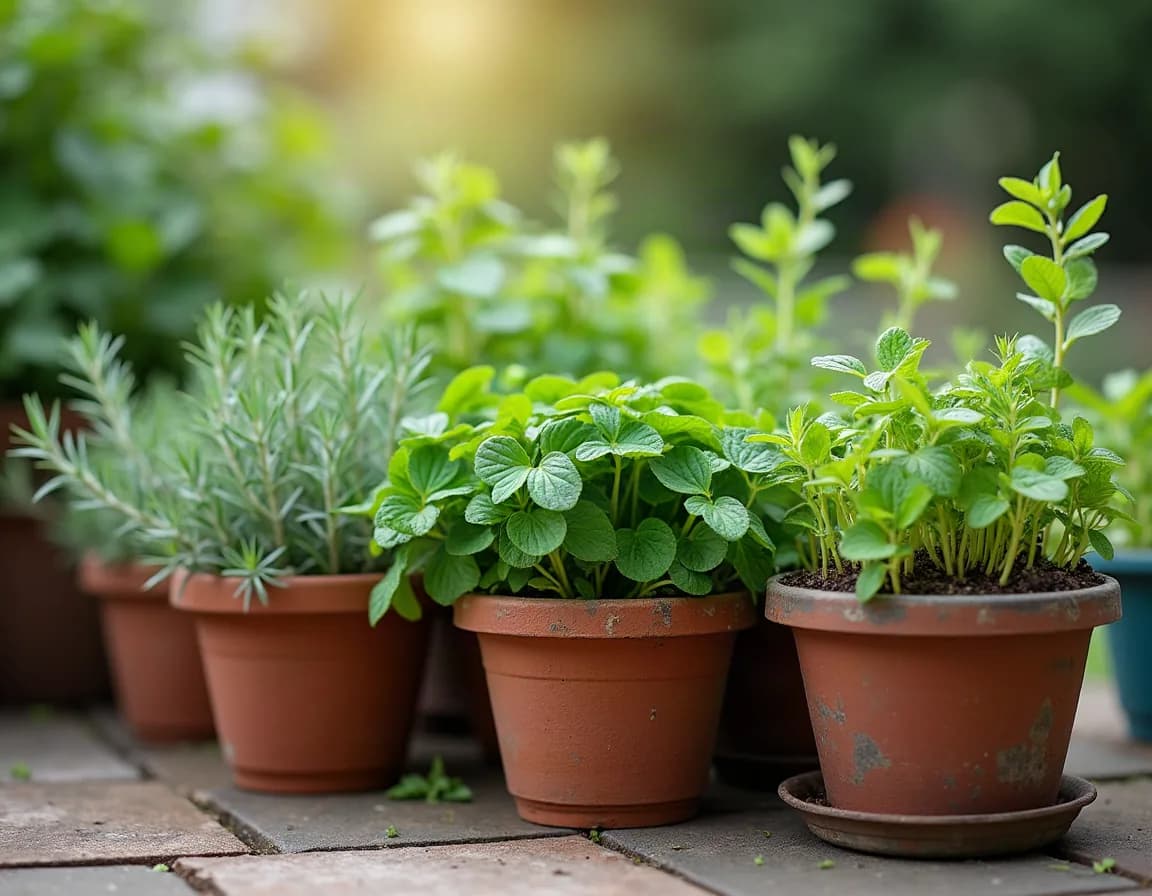
This is the pot-growing rule that the beginner mistakes break: one big mixed pot of every herb you own. The trouble is that herbs fall into two camps that want opposite watering. Put them together and you either drown the dry ones or starve the thirsty ones of water.
| Group | Herbs | Compost | Watering |
|---|---|---|---|
| Mediterranean (dry-loving) | Rosemary, thyme, sage, oregano, marjoram, winter savory | Peat-free compost with one handful of grit for every two of compost | Only once or twice a week, more in very dry spells; never waterlogged |
| Thirsty (moisture-loving) | Mint, parsley, chives, basil, coriander | Richer peat-free compost, plus garden compost or slow-release feed | Keep evenly moist; water far more often, even daily in heat |
What compost and drainage do pots need?
Fill pots with peat-free multi-purpose compost, not garden soil, which compacts and drains poorly in a container. The mix then changes with the camp. For the dry-loving Mediterranean herbs, work in horticultural grit at one handful of grit for every two of compost so water runs straight through. For thirsty leafy herbs, add garden compost or a slow-release feed to hold more moisture and food.
Before filling, add a drainage layer of at least 2.5cm (1in) of gravel, crocks or broken-up polystyrene in the base so the holes never clog. Space herbs 15-20cm (6-8in) apart if you are putting a few of the same camp in one wide pot.
How do I water and feed herbs in pots?
Pots are where container growing is won or lost. With only a little compost to draw on, they dry out and use up nutrients far faster than open ground, so they need more attention than the same herb in a bed.
- Mediterranean herbs: water only once or twice a week, more in very dry spells. Let the compost dry a little between waterings and never leave them waterlogged.
- Thirsty leafy herbs: keep the compost evenly moist, which can mean watering most days in warm weather, and up to twice a day for small pots in full sun.
Both camps run short of food eventually. From a couple of months after planting, give a general-purpose liquid feed every two or three weeks through the growing season. Go easy on the Mediterranean herbs: a lot of feed makes soft, floppy growth with less flavour. Trim the woody herbs back by about a third after they flower to keep them bushy.
When should I repot herbs?
Perennial herbs fill their pots over time, and once roots are circling the inside or poking out the bottom, the plant dries out even faster and sulks. Repot every few years, moving up one pot size into fresh compost, ideally in spring as growth starts.
Vigorous spreaders are the exception: rather than potting them on endlessly, lift mint and lemon balm each spring, split the clump into two or three pieces and replant the best bit in fresh compost. The per- herb guides cover the detail, for example the guide to growing rosemary for woody herbs.
How do I overwinter herbs in pots?
A pot gives roots far less insulation than the ground, so cold and wet are the two winter killers. Two jobs see most herbs through:
- Keep them from sitting wet. Raise pots onto bricks or pot feet, clear the drainage holes, and tip away any saucers so compost never freezes solid and waterlogged.
- Protect the tender ones. Basil, lemon verbena and lemongrass are not frost hardy, so move them under cover before the first frosts, into a greenhouse, porch or onto a bright windowsill.
| At a glance | |
|---|---|
| Mediterranean herb pot | At least 20cm (8in) deep |
| Rosemary pot | At least 30cm (1ft) wide and deep |
| Drainage layer | At least 2.5cm (1in) of gravel or crocks |
| Grit (dry-lovers) | One handful per two of compost |
| Spacing in a pot | 15-20cm (6-8in) apart |
| Feeding | Liquid feed every 2-3 weeks in growth |
| Repot | Every few years, or when roots fill the pot |
Frequently asked questions
What size pot do herbs need?
At least 20cm (8in) deep for most herbs, with drainage holes in the base. Rosemary wants a bigger pot, at least 30cm (1ft) wide and deep. Smaller pots dry out and run short of food quickly, so bigger is easier.
Can I grow all my herbs in one pot?
It is better not to. Dry-loving Mediterranean herbs like rosemary, thyme and sage want gritty compost and little water, while leafy herbs like mint, parsley and basil want richer compost and frequent watering. Grouping both in one pot means one of them suffers, so split them into separate pots by watering need.
What compost is best for herbs in pots?
Peat-free multi-purpose compost, not garden soil. For Mediterranean herbs, mix in horticultural grit at about one handful per two of compost for sharp drainage. For thirsty leafy herbs, add garden compost or a slow-release feed to hold more moisture.
How often should I water herbs in containers?
It depends on the herb. Mediterranean herbs need watering just once or twice a week, more in dry spells, and hate being waterlogged. Leafy herbs like basil and parsley want evenly moist compost, which can mean most days in warm weather. Containers dry out much faster than open ground either way.
How do I keep potted herbs alive over winter?
Raise pots onto feet so they drain freely and never sit in frozen water, and clear the drainage holes. Move tender herbs such as basil under cover before the first frost. Pot up a few roots of chives, mint or parsley for a sunny windowsill to keep picking through winter.
How we checked this2 sourcesView sourcesHide
Our guides draw on expert bodies like the RHS and Garden Organic, plus experienced growers, read at source. We check every guide against those sources on the date shown, and where advice differs between them, we say so. Garden Plans is published by Limely.
- AuthorityGrow your own herbs in a pot, Royal Horticultural Society. Checked 24 Oct 2026.
- AuthorityGrowing herbs in pots, Gardeners' World. Checked 24 Oct 2026.