The short answer
Chives are a hardy perennial, so a single clump comes back every spring and dies down in winter. Grow them in sun or light shade in soil that stays moist but never waterlogs. You can sow in spring or simply buy a plant. Snip the leaves from the base with scissors through summer to keep more coming, leave a few of the purple pompom flowers for the bees and the salad bowl, and lift and divide the clump every few years to keep it vigorous.
Chives at a glance
Chives are one of the easiest herbs to keep going. They are a hardy member of the onion family, so once you have a clump it returns year after year with next to no fuss. Get the moisture right and they look after themselves.
| Chives | |
|---|---|
| Type | Hardy herbaceous perennial (onion family); dies back in winter, regrows in spring |
| Position | Sun or partial shade; moisture-retentive soil that never waterlogs |
| Sow indoors | Early spring, in modules, 0.5-1cm (quarter to half an inch) deep |
| Germination | 20-25C, seedlings within about three weeks |
| Spacing | Clumps at least 15cm (6in) apart |
| Height | About 30cm (12in) |
| Harvest | Leaves from late spring until die-back in autumn |
Sowing and planting
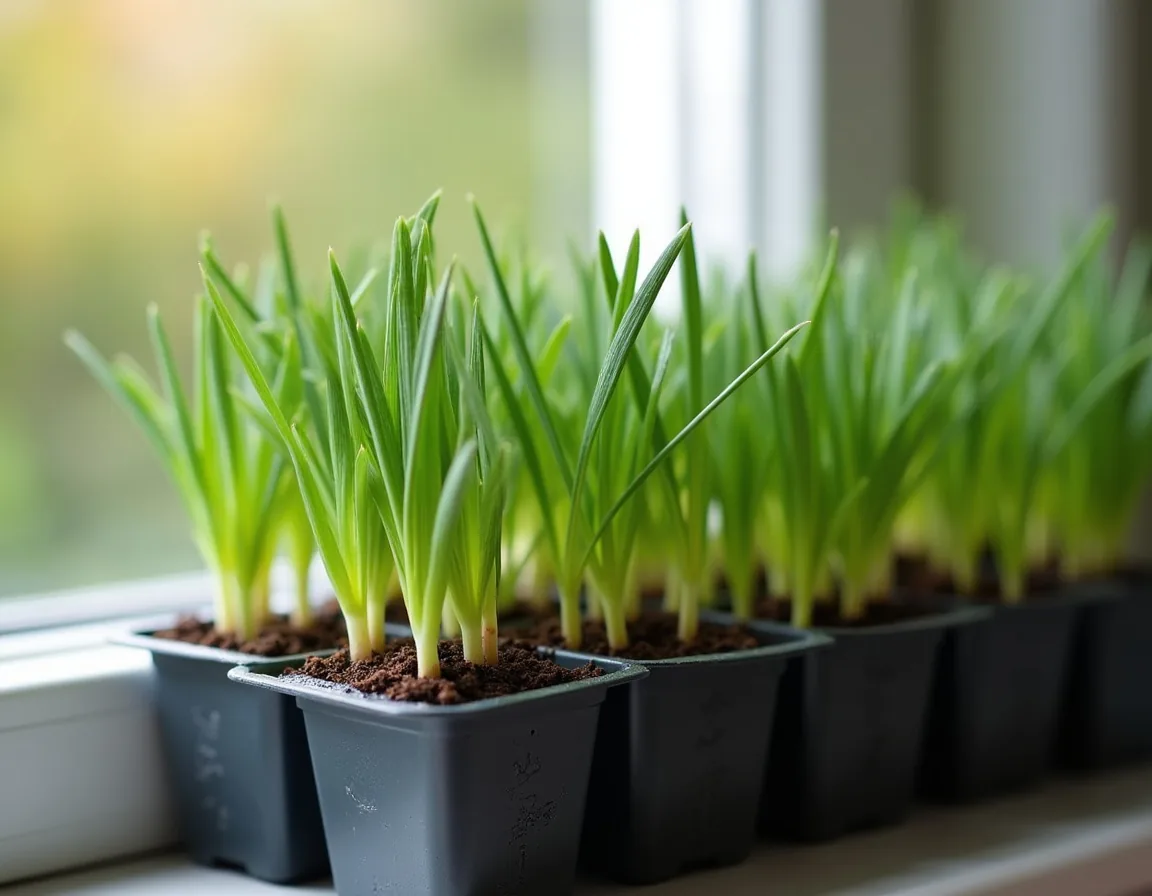
Chives are easy from seed, but because one plant lasts for years, many people just buy a pot and get going straight away. If you do sow, spring is the time:
- Sow indoors in early spring in modules of damp peat-free seed compost, 0.5-1cm (quarter to half an inch) deep. You can also sow thinly outdoors in spring at the same depth.
- Keep them warm and bright: they germinate at 20-25C, with seedlings appearing within about three weeks.
- Move seedlings on once they are a few centimetres tall, and harden off indoor-raised plants for about a week before they go outside.
- Thin or space young plants 15-20cm (6-8in) apart and plant out clumps at least 15cm (6in) apart.
A supermarket pot of chives is usually a mass of crowded seedlings. Tip it out, split it into two or three smaller clumps, and pot those on or plant them out: they will do far better with room to grow.
Where to grow it
Chives are relaxed about position: they are happy in full sun or partial shade. What matters more is the soil, which wants to be fertile and moisture-retentive but never waterlogged. They make a neat edging plant along a path or bed.
They grow just as well in a container of peat-free multi-purpose compost, which suits a sunny windowsill or a spot by the back door. Plant clumps at least 15cm (6in) apart so each has room to bulk up.
Watering and care
Water newly planted chives during dry spells in their first summer while they settle in. After that, plants in the ground rarely need watering except in an exceptionally long dry spell. Chives in pots are the exception: keep the compost evenly moist through the growing season, as containers dry out fast.
There is not much else to do. Chives die back in winter and there is no need to tidy or feed them heavily; they simply push up fresh leaves again in spring.
Harvesting and the flowers
You can pick chives from late spring right through until they start to die back in autumn. Snip the leaves with scissors just above the base of the clump whenever you need them, which encourages fresh new leaves to come through. Cut in the morning if you can, when the leaves are at their most lush. Chives lose their flavour when cooked, so add them raw at the last moment.
In late spring and summer the clump throws up its purple pompom flowerheads, and these are edible too. Leave some for the bees, then pick a few newly opened heads and scatter the individual florets over salads and soups for a mild oniony note and a bit of colour.
Dividing
A chive clump slowly gets congested, and tired, crowded plants give thinner leaves. Lift and divide them every three or four years, in spring or autumn to keep them vigorous. Dig up the whole clump, pull or cut it apart into smaller sections each with roots and a few bulbs, and replant them straight away at the same depth, watering them in.
Division is also the easiest way to get more plants for free, or to share a bit with a neighbour.
Types to try
Common chives are the ones most people grow, but it is worth knowing a couple of relatives for different flavours:
| Type | Good for |
|---|---|
| Common chives | The everyday kind, about 30cm (12in), mild onion flavour and purple pompom flowers |
| Garlic (Chinese) chives | Allium tuberosum, flat leaves with a garlicky taste, taller at 40-50cm (16-20in) |
| Siberian chives | Bigger and bolder, up to 60cm (2ft), with larger flowerheads |
Common problems
- Leek rust shows as bright orange-yellow spots on the leaves in a damp summer. Cut off badly affected growth, avoid crowding, and the plant usually recovers.
- Aphids and greenfly can gather on the leaves; rub them off or rinse them away with water.
- Waterlogged soil is the main killer, as the bulbs rot in ground that stays wet. Improve drainage or grow in a pot if your soil is heavy.
- Congestion is not a disease, but a clump left undivided for too long gives thin, weak leaves; see the dividing section above.
Frequently asked questions
Do chives come back every year?
Yes. Chives are a hardy perennial, so a clump dies back in winter and pushes up fresh leaves again in spring. One plant will keep going for years, especially if you lift and divide it every three or four years to stop it getting congested.
Can I eat chive flowers?
Yes, the purple pompom flowerheads are edible and have a mild oniony flavour. Pick newly opened heads and pull the individual florets apart to scatter over salads and soups. Leave some flowers on the plant, as bees love them.
How do I harvest chives so they keep growing?
Snip the leaves with scissors just above the base of the clump rather than picking off the tips. Cutting low encourages fresh new leaves to come through. You can harvest from late spring until the plant dies back in autumn, ideally in the morning when the leaves are at their most lush.
Do chives grow in shade?
Yes, chives are happy in full sun or partial shade, which makes them useful for spots that are not baked all day. What they really want is fertile soil that stays moist but never waterlogs, so improve drainage on heavy ground or grow them in a pot.
When should I sow chives?
Sow in spring, either indoors in modules in early spring or thinly outdoors a little later, about half a centimetre deep. They germinate at around 20 to 25C and seedlings appear within about three weeks. Because one plant lasts for years, buying a pot and dividing it is often the quicker route.
How we checked this2 sourcesView sourcesHide
Our guides draw on expert bodies like the RHS and Garden Organic, plus experienced growers, read at source. We check every guide against those sources on the date shown, and where advice differs between them, we say so. Garden Plans is published by Limely.
- AuthorityHow to grow chives, Royal Horticultural Society. Checked 22 Oct 2026.
- AuthorityHow to grow chives, Gardeners' World. Checked 22 Oct 2026.