The short answer
Pick herbs little and often, taking the young shoot tips or outer leaves in the morning once the dew has dried and, ideally, before the plant flowers, which is when the leaves taste strongest. To keep a glut, match the method to the herb: dry the woody ones (rosemary, thyme, sage, oregano, bay) and freeze the soft ones (basil, chives, parsley, coriander), as those lose their flavour if you try to dry them. Store dried herbs in an air-tight jar, out of the light.
Harvesting and preserving at a glance
Herbs are a cut-and-come-again crop, so picking them well keeps the plant productive and gets the best flavour onto your plate. When you have more than you can use, the trick is simply to preserve each herb the way that suits it.
| Herbs | |
|---|---|
| Best time to pick | Morning, once the dew has dried, before the plant flowers |
| Which part | Young shoot tips or outer leaves, a little and often |
| Drying | Hang in a warm, dark, airy place for a few weeks, then jar |
| Freezing | Chop into ice-cube trays with water or oil, then freeze |
| Storing dried | Air-tight jar, dark and cool, use within about a year |
When should I pick herbs for the best flavour?
The flavour in a herb lives in its volatile oils, and those are at their strongest in young, soft growth before the plant turns its energy to flowering. So pick the tips and outer leaves regularly, and try to get to a herb before it blooms: once it flowers, the leaves of most culinary herbs lose quality, which is why I pinch off flower stems as they appear.
Time of day matters too. I pick in the morning, once the dew has dried but before the midday sun, because the aromatic oils are highest early in the day and fade as the plant heats up. Take the young shoot tips or the outer leaves, a little from several plants rather than stripping one bare, and the plant branches out and gives you more.
How do I harvest soft and woody herbs?
It helps to split herbs into two camps, because they are picked, and preserved, differently.
- Soft leafy herbs (basil, parsley, coriander, chives, mint) are cropped through the growing season. Take the shoot tips, or snip a few leafy stems from the outside of the plant near the base, which keeps the centre growing.
- Woody evergreen herbs (rosemary, thyme, sage, bay) can be picked a sprig at a time more or less year round. Rosemary is evergreen so can be harvested all year, but the soft new growth in late spring and summer has the best flavour.
Soft herbs mostly die back or get cut down over winter, so late summer and autumn is the moment to preserve a batch. Woody herbs you can keep picking fresh, so there is less need to store them, though they are also the ones that dry best.
Which preserving method suits which herb?
There is no single best way to preserve herbs: the right method depends on how much water is in the leaf. Here is what I reach for.
| Method | Best for | How |
|---|---|---|
| Air-drying | Woody, robust herbs: rosemary, thyme, sage, oregano, marjoram, bay | Tie leafy stems or sprigs in a loose bunch and hang in a warm, dark, well-ventilated place for a few weeks. Strip or crush the dried leaves and store in an air-tight jar. |
| Freezing (water cubes) | Soft, high-moisture herbs: parsley, chives, coriander, dill, mint | Chop the leaves, pack into an ice-cube tray, top up with water and freeze. Drop a cube straight into soups, stews and sauces. |
| Freezing (oil cubes or whole) | Basil and other soft herbs that discolour or lose flavour when dried | Chop and freeze in oil in ice-cube trays, or freeze small sprigs whole in a bag. The oil cubes go straight into the pan. |
| Herb oils, vinegars and butters | Gluts of soft herbs you want to use through winter | Blend soft herbs into softened butter and freeze as a log, or steep sprigs in vinegar. Oils made with fresh herbs must be kept in the fridge (see the food-safety note). |
Which herbs dry well, and which should I freeze?
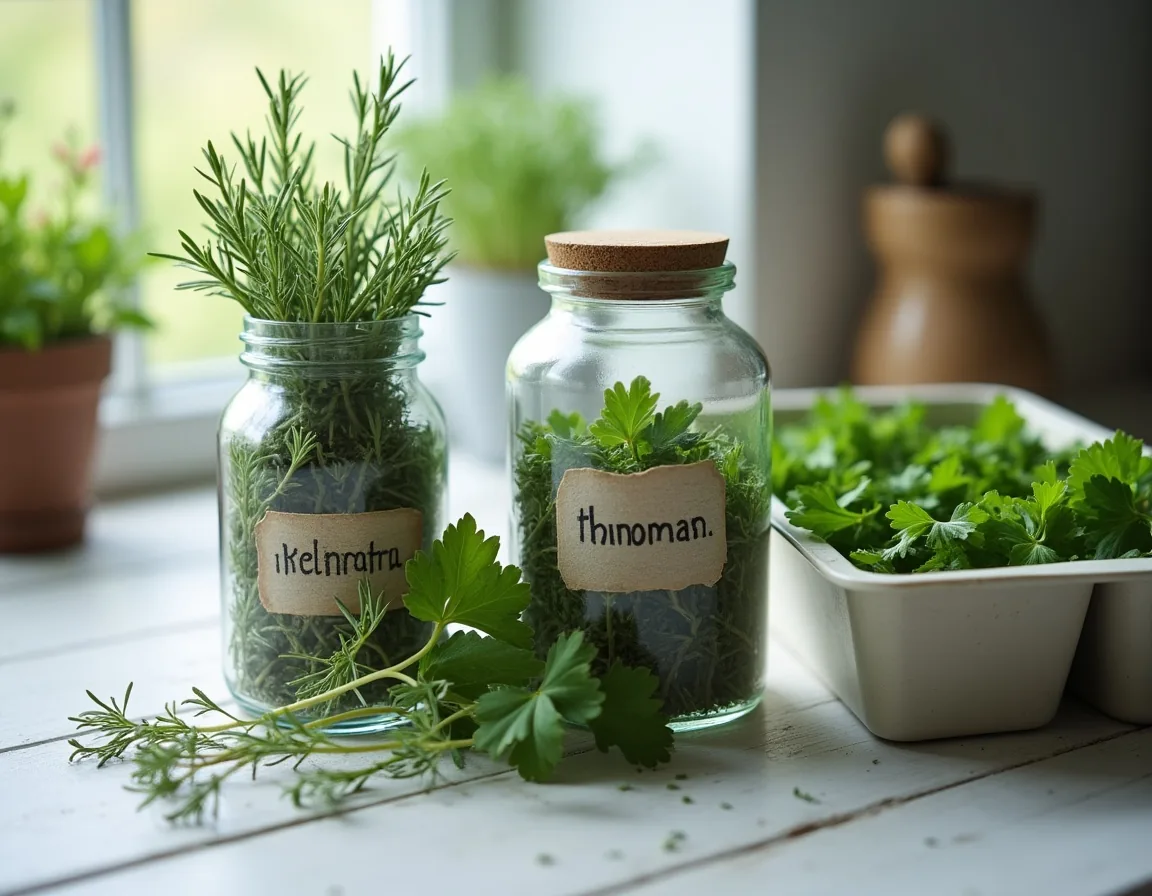
This is the part people get wrong, and it wastes a lot of good herbs. Robust, low-moisture herbs dry beautifully and hold their flavour. Soft, high-moisture herbs turn to dusty hay when dried, so freeze them instead. Dried parsley, for instance, has far less flavour than fresh, and mint keeps far more of itself frozen than dried.
| Dry these | Freeze these |
|---|---|
| Rosemary | Basil |
| Thyme | Chives |
| Sage | Parsley |
| Oregano and marjoram | Coriander |
| Bay | Dill |
| Mint (acceptable, but freezing keeps more flavour) | Chervil |
To dry: tie leafy stems or sprigs into a loose bunch and hang them in a warm, dark, well-ventilated place for a few weeks. Once fully dry, crush the leaves or strip them off the woody stems. To freeze: chop the leaves, pack them into an ice-cube tray, top up with water and freeze, then drop a cube straight into whatever you are cooking.
Herb oils, butters, and storing dried herbs
Beyond drying and freezing, soft herbs make good oils, vinegars and butters. Blend chopped herbs into softened butter, roll it into a log and freeze it, slicing off discs as you need them; or steep sprigs in a bottle of vinegar for dressings. You can also freeze chopped herbs in oil in ice-cube trays, which go straight into a hot pan.
Store dried herbs in an air-tight jar, somewhere cool and dark, as light and heat drive off the oils you worked to keep. They hold their flavour best for about a year, so I label each jar with the date and replace the lot every season rather than topping up a tired jar.
Frequently asked questions
What time of day should I pick herbs?
In the morning, once the dew has dried but before the midday heat. The aromatic oils that give herbs their flavour are at their highest early in the day, so morning-picked leaves taste strongest. Pick young shoot tips and outer leaves, before the plant flowers.
Which herbs dry well and which should I freeze?
Dry the woody, robust herbs: rosemary, thyme, sage, oregano, marjoram and bay all hold their flavour dried. Freeze the soft, high-moisture herbs: basil, chives, parsley and coriander lose their flavour when dried, so they are much better frozen. Mint can be dried but keeps more flavour frozen.
How do I dry herbs at home?
Tie leafy stems or sprigs into a loose bunch and hang them in a warm, dark, well-ventilated place for a few weeks. Once fully dried, crush the leaves or strip them off the stems and store them in an air-tight jar. Keep the jar out of the light so the flavour lasts.
Is it safe to put fresh herbs in oil?
Only if you keep it cold. Fresh herbs in oil at room temperature can allow the bacterium behind botulism to grow, as it is low-acid and airless. Keep any oil made with fresh herbs in the fridge and use it within about a week, or dry the herbs first, since dried herbs in oil are safe at room temperature.
How long do dried herbs keep?
They hold their best flavour for about a year when stored in an air-tight jar somewhere cool and dark. After that they are safe but flat, so label each jar with the date and replace them every season rather than keeping a tired jar going for years.
How we checked this2 sourcesView sourcesHide
Our guides draw on expert bodies like the RHS and Garden Organic, plus experienced growers, read at source. We check every guide against those sources on the date shown, and where advice differs between them, we say so. Garden Plans is published by Limely.
- AuthorityHerbs: harvesting and storing, Royal Horticultural Society. Checked 24 Oct 2026.
- AuthorityHow to preserve herbs, Gardeners' World. Checked 24 Oct 2026.