The short answer
Strawberries are one of the easiest fruits to grow. Give them a sunny, sheltered spot and fertile, well-drained soil, and plant them with the crown sitting level with the surface: bury it and it rots, leave it too proud and the roots dry out. Tuck straw under the plants as the fruit forms to keep it clean, net the bed before the berries ripen so the birds do not get there first, and replace the plants every three or four years to keep cropping. Mix summer-fruiting and perpetual types for berries from June to the first frosts.
Strawberries at a glance
Strawberries crop quickly, suit a bed, a pot or a hanging basket, and reward very little effort. Get the type, the planting depth and the bird netting right and the rest looks after itself.
| Strawberries | |
|---|---|
| Plant | Spring, or late summer to early autumn (cold-stored runners plant immediately) |
| Position | Full sun and sheltered (alpines take some shade) |
| Soil | Fertile, well-drained, slightly acidic; raised beds on heavy soil |
| Spacing | Plants 30 to 45cm (12 to 18in) apart, rows about 75cm (30in) apart |
| Harvest | Early summer into autumn, depending on type |
| Watch for | Birds, grey mould, slugs and snails |
Which type to grow
There are three kinds, and I would grow more than one so the fruit keeps coming rather than arriving all at once:
- Summer-fruiting give the biggest berries and the heaviest crop, but over a short window: roughly two to three weeks between early June and early August. Early, mid and late varieties stretch that season out.
- Perpetual types (also called everbearers) crop in smaller flushes from early summer to early autumn, with smaller fruit and fewer runners.
- Alpine strawberries make tiny, intensely aromatic berries on and off through summer and will take a little shade, so they are handy for edging a border.
For a first bed I would buy pot-grown plants of a couple of reliable summer varieties plus one perpetual, so you pick from June right through to the first frosts. See growing fruit in the UK for how strawberries fit alongside other crops.
Planting
Plant in spring, or in late summer to early autumn, which gives the plants time to settle before winter and a better first crop. Cold-stored runners sold in spring should go in straight away. The one thing to get right is the depth.
- Set each plant with the base of the crown resting lightly on the surface. Too deep and the crown rots; too shallow and the roots dry out.
- Space plants 30 to 45cm (12 to 18in) apart, in rows about 75cm (30in) apart. They spread, so do not crowd them.
- Choose a sunny, sheltered spot and fertile, well-drained soil that is slightly acidic. On heavy clay, grow in raised beds for drainage.
- Water new plants regularly while they establish, then water all plants only in prolonged dry spells.
Bare-root runners sold while dormant in winter and early spring are usually cheaper than pot-grown plants, and fine if you are planting a whole row. If you garden no-dig, mulch the surface first and plant straight into the mulch.
Growing in pots and baskets
Strawberries are made for containers, and a hanging basket keeps the fruit off the ground and away from slugs. Use peat-free multipurpose or soil-based compost in pots, growing bags, troughs, tubs or baskets, in a sheltered, sunny spot.
- A single plant wants a pot at least 15cm (6in) across, with gravel or broken crocks in the base for drainage.
- Compost dries out fast, so water regularly, aiming at the compost rather than the crown or the fruit.
- Container plants do need feeding: a fortnightly general-purpose liquid feed, switching to a high-potassium (tomato) feed once the first flower buds appear.
For more on compost and pot choice, see growing vegetables in containers: the same principles apply to fruit.
Mulching, feeding and beating the birds
Once the fruit starts to form, tuck a layer of straw under and around the plants. It keeps the berries off damp soil so they stay clean and dry, and makes slug damage less likely. Clear the straw away in autumn, as a damp layer over winter harbours fungal disease, slugs and snails.
Plants grown in the ground are unlikely to need extra feeding. Water in the morning rather than the evening, and keep water off the crown and the fruit to cut the risk of grey mould.
Runners and renewing the bed
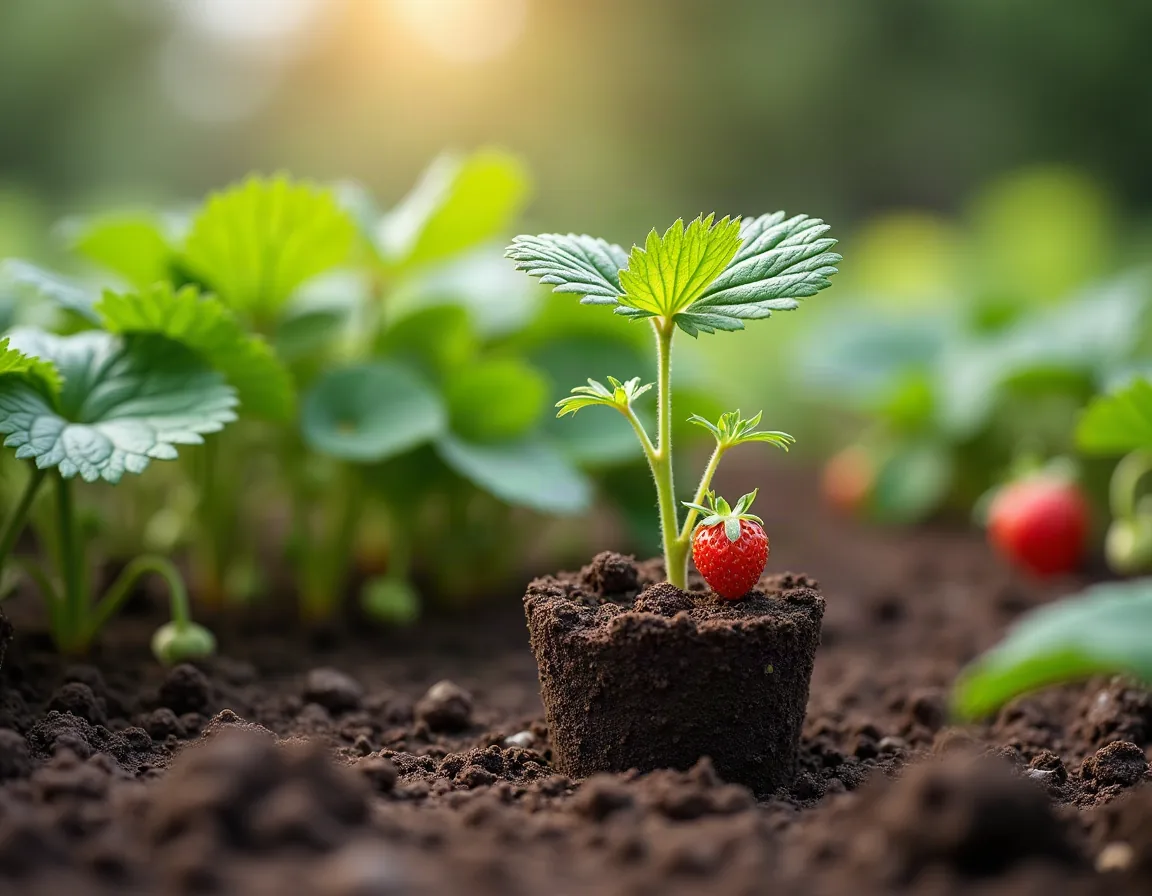
Through summer, plants throw out runners: long stems with baby plants at the tips. Remove the ones you do not want so the bed does not become a crowded mat, which cuts cropping and airflow.
To raise free plants, in late summer sink a 9cm (3.5in) pot of compost beside the parent, peg a runner into it, and leave it attached until it has rooted strongly. Then sever the link and you have a new plant.
Harvesting and varieties to try
Pick when the berries are bright red all over, ideally in the warmest part of the day when they are sweetest. They do not ripen any further once picked and they do not keep, so eat them within a day or two. Depending on type you will be picking from early summer into autumn.
These are reliable in UK gardens, most with an RHS Award of Garden Merit, grouped so you can plan a long season:
| Variety | Type | Notes |
|---|---|---|
| 'Honeoye' AGM | Summer, early | Reliable early cropper, good flavour |
| 'Vibrant' AGM | Summer, early | Early, heavy crop of bright fruit |
| 'Hapil' AGM | Summer, early to mid | Does well on lighter and drier soils |
| 'Cambridge Favourite' AGM | Summer, mid | Long-trusted, dependable mid-season variety |
| 'Pegasus' AGM | Summer, late | Late, with some disease resistance |
| 'Florence' AGM | Summer, late | Late and robust, good for extending the season |
| 'Finesse' AGM | Perpetual | Crops in flushes from summer to early autumn |
Strawberries sit well next to other soft and top fruit: see growing raspberries and growing rhubarb for more of the same low-effort, high-reward crops.
Frequently asked questions
When should I plant strawberries?
Plant in spring, or in late summer to early autumn. An autumn planting gives the plants time to establish before winter and a better first crop the next year. Cold-stored runners bought in spring should be planted straight away, and will crop about 60 days later.
How deep should I plant a strawberry?
Set each plant so the base of the crown rests lightly on the soil surface, level with the ground. If you bury the crown it tends to rot, and if you leave the roots too proud they dry out. Firm the soil around it and water it in.
Can I grow strawberries in pots or hanging baskets?
Yes, and a basket keeps the fruit off the ground and away from slugs. Use peat-free or soil-based compost in a pot at least 15cm (6in) across with drainage in the base, water regularly as it dries out fast, and feed fortnightly, switching to a high-potassium feed once flower buds form.
How do I stop birds eating my strawberries?
Net the bed before the berries ripen, not after. Build a frame of canes or wood and cover it with taut plastic-free or reused netting, or grow in a fruit cage. Blackbirds in particular will take the fruit the moment it colours up.
How often should I replace my strawberry plants?
A strawberry bed crops well for up to four years, then yields fall and disease builds up. Replant every three or four years in a fresh spot, using rooted runners or bought plants. Staggering the replacement means you always have a productive bed.
How we checked this2 sourcesView sourcesHide
Our guides draw on expert bodies like the RHS and Garden Organic, plus experienced growers, read at source. We check every guide against those sources on the date shown, and where advice differs between them, we say so. Garden Plans is published by Limely.
- AuthorityStrawberries: grow your own, Royal Horticultural Society. Checked 26 Oct 2026.
- AuthorityHow to grow strawberries, Gardeners' World. Checked 26 Oct 2026.