The short answer
Most garden diseases are fungal, and I treat them the same way: identify it, remove the infected leaves straight away, and change the conditions that let it in. That means growing resistant varieties, spacing plants so air moves through them, watering the roots rather than the leaves, and keeping the plot clean. Chemical help is now minimal, as there are no fungicides amateurs can buy against blight, downy mildew or grey mould, so prevention is the whole game.
Which disease is it?
Start by matching what you can see. Most of what troubles UK gardens comes down to six fungal diseases, and the quick tells below get you to the right one. If the damage looks more like chewing, holes or wilting with no mould, it is probably a pest or a growing problem, not a disease: see our guides to common plant problems and organic pest control.
| Disease | What it looks like | What it hits | What to do |
|---|---|---|---|
| Powdery mildew | White, dusty coating on leaves, stems and flowers | Roses, cucurbits, apples, peas, many ornamentals (each strain stays on related plants) | Mulch and water the roots to stop drought stress, space for air flow, remove infected leaves |
| Downy mildew | Yellow or brown blotches on top of the leaf, grey or purple mould underneath | Brassicas, onions, lettuce, peas, busy Lizzie, pansies | Thin for air flow, water the base not the leaves, pick off affected leaves, rotate crops |
| Rose black spot | Black or purple patches on leaves, yellowing, early leaf fall | Roses | Clear and bin fallen leaves, prune out stem lesions in spring, grow resistant varieties |
| Rust | Orange or black pustules under the leaf, yellow spots on top | Roses, hollyhock, leeks, mint (each rust stays on one host) | Remove infected leaves, prune out spring infections, improve air flow |
| Potato and tomato blight | Fast watery brown rot on leaves, white mould underneath, rotting tubers or fruit | Potatoes and tomatoes (worst in warm, wet summers) | Grow resistant varieties, earth up, cut off and bin affected foliage, never compost it |
| Grey mould (botrytis) | Fuzzy grey-brown mould on dying tissue, buds, flowers and soft fruit | Strawberries, tomatoes, lettuce and many plants, especially under glass | Remove dying material promptly and bag it, improve ventilation, do not overcrowd |
Powdery and downy mildew
These two get muddled because of the name, but they are different diseases with opposite causes. Powdery mildew is the white, dusty coating you see on leaves, stems and flowers of roses, courgettes, peas and apples. The RHS notes it is a disease of dry roots and humid air, so plants that dry out at the roots in a sheltered, still spot get it worst. Each powdery mildew sticks to a few related plants, so the one on your courgettes will not jump to your roses.
Downy mildew is the reverse: a disease of wet weather. It shows as yellow or brown blotches on top of the leaf with a grey or purple mould on the underside, and it hits brassicas, onions, lettuce and busy Lizzie. The RHS confirms there are no fungicides available to amateur gardeners against it, so control is all cultural.
- For powdery mildew, keep the roots moist: mulch and water in dry spells so plants are never drought-stressed, and avoid piling on nitrogen feed.
- For downy mildew, do the opposite with the leaves: water the base, not the foliage, and never water in the evening so leaves do not sit wet overnight.
- For both, space plants for air flow, pick off affected leaves as soon as you spot them, and rotate crops such as lettuce and onions.
Rose black spot and rust
Black spot is the most serious rose disease, caused by the fungus Diplocarpon rosae. You get black or purple patches on the upper leaf surface, yellowing around them and early leaf fall, and the RHS says badly affected plants can shed nearly all their leaves. Look too for small dark scabby lesions on young stems, which carry the fungus over winter.
Rust shows as orange or black pustules on the leaf undersides with yellow spots on top. Rose rust (Phragmidium tuberculatum) distorts young stems in spring with bright orange pustules. Rusts are almost all host-specific, so the rust on your hollyhock, leeks or mint is a different fungus each time and will not spread between them.
- Clear fallen leaves in autumn and bin or bury them; this is the single most useful thing, as both fungi overwinter on dead leaves and on the stems.
- Prune out stem lesions and spring rust as soon as you see them, before the spores spread.
- Grow resistant roses. Older species types tend to be tougher, and newer resistant varieties help, though the fungus adapts over time so treat resistance as a head start, not a cure.
Potato and tomato blight
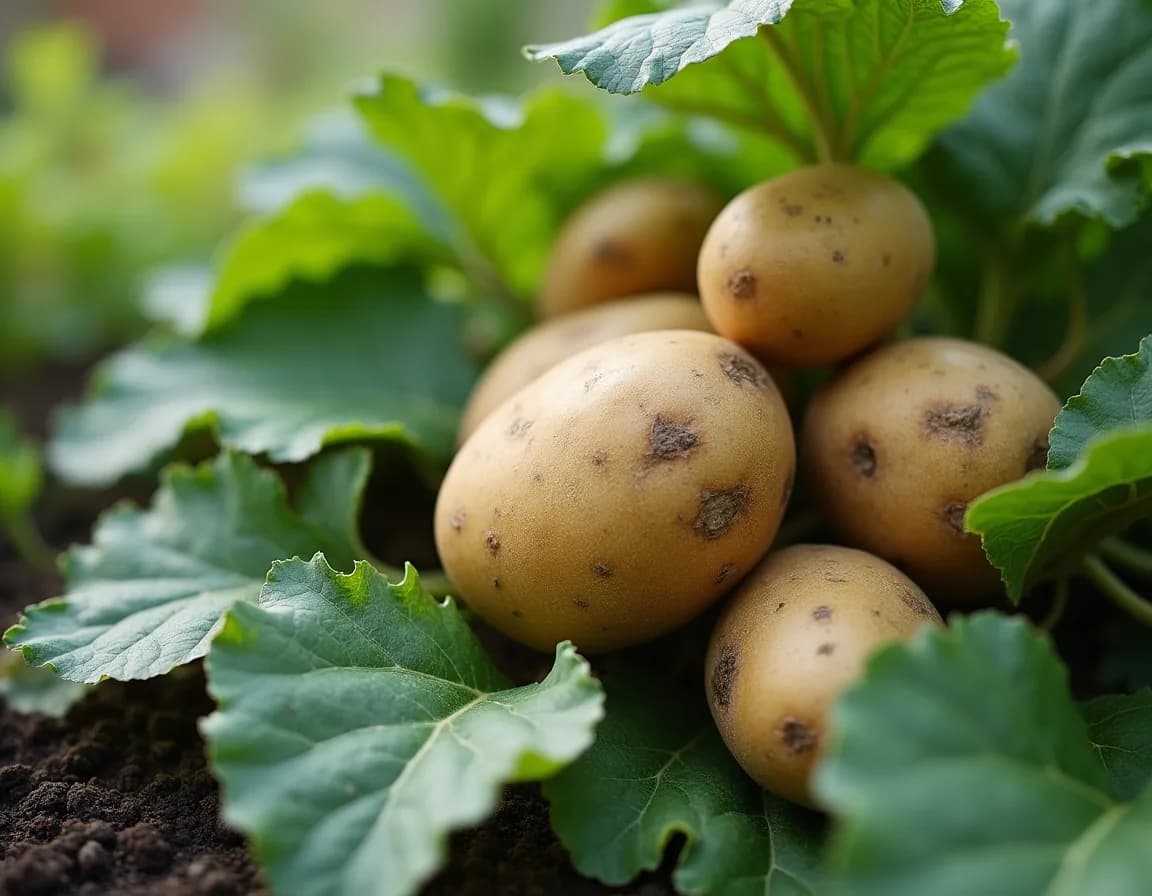
Blight (Phytophthora infestans) is the one that moves fastest. In a warm, wet summer it spreads through potato and tomato foliage in days: a watery brown rot that collapses the leaves, sometimes with a fine white mould on the underside, and brown lesions on the stems. The potato tubers then rot under the skin, and tomato fruit rots on the plant. It needs several hours of leaf wetness to take hold, which is why wet summers are the bad ones.
The RHS is clear that there are currently no fungicides available to gardeners against blight, so you win this one before it starts.
- Grow resistant varieties. The Sarpo potatoes, plus Carolus, Alouette and Athlete, shrug off blight far better than the old favourites; for tomatoes, grow them under cover where you can.
- Earth up potatoes so spores washing down off the leaves cannot reach the tubers.
- Cut off and remove the foliage once about a quarter of the leaves are hit, to save the crop below, and use a four-year rotation. More on growing the crop itself in our growing potatoes guide.
Grey mould (botrytis)
Grey mould (Botrytis cinerea) is the fuzzy grey-brown mould that appears on dying tissue, buds, flowers and soft fruit, and it will rot strawberries, grapes, tomatoes and lettuce. It has one of the widest host ranges of any disease and can strike at any time of year, but it really takes off in damp, still, crowded conditions, above all in a greenhouse or polytunnel.
It almost always starts on tissue that is already dead, dying or damaged, so good housekeeping is most of the answer. There are no fungicides approved for gardeners against grey mould either.
- Remove dead and dying leaves, buds and flowers promptly, and bag them as you go so you do not shake the spores over healthy plants.
- Improve ventilation under glass and do not overcrowd; moving air is what botrytis hates.
- Handle plants gently. Every bruise and snapped stem is a way in, so pick fruit cleanly and avoid damage.
Why prevention beats cure
Notice how the advice above keeps repeating itself. That is the point: the same handful of cultural steps prevent nearly every fungal disease, and with so few chemical options left they do almost all the work. Build these into how you garden and you will rarely need to treat anything.
| Do this | Why it works |
|---|---|
| Grow resistant varieties | The easiest win: resistant roses, lettuces and blight-beating potatoes like Sarpo exist for the big diseases. |
| Space plants for air flow | Still, humid air sitting around crowded leaves is what mildews, rust and botrytis need to take hold. |
| Water the base, not the leaves | Wet foliage spreads downy mildew, rust and blight; keep the roots moist and the leaves dry. |
| Keep the garden clean | Clear fallen and infected leaves so spores cannot overwinter and start again next year. |
| Never compost blighted or badly diseased material | Bin it, bury it or burn it; a home heap will not kill blight and you just reinfect the plot. |
| Rotate crops | Moving potatoes, onions and brassicas each year starves soil-borne spores of a host. |
Crop rotation deserves a special mention for the vegetable plot, as it starves soil-borne spores of the host they need, and it is the backbone of beating blight, onion downy mildew and brassica problems year on year.
What about fungicides?
There are no fungicides available to amateur gardeners against blight, downy mildew or grey mould, and for powdery mildew, black spot and rust the RHS recommends not using them.
In practice that means the amateur fungicide shelf is now almost bare. For the diseases where a product does still exist, the RHS recommends you do not use it, warning that garden fungicides can reduce biodiversity and affect soil health for little lasting gain. The fungus also tends to come back once you stop spraying, whereas a resistant variety and good hygiene keep paying off.
Frequently asked questions
What is the difference between powdery and downy mildew?
Powdery mildew is a white, dusty coating on top of the leaves and is worst on plants with dry roots in humid, still air. Downy mildew is the opposite: a disease of wet weather, with yellow or brown blotches on top of the leaf and a grey or purple mould underneath. For powdery mildew keep the roots moist; for downy mildew keep the leaves dry and water the base.
How do I get rid of rose black spot?
There is no quick cure, so it is about hygiene and variety. Collect and bin or bury the fallen leaves in autumn, prune out any dark scabby lesions on the stems in spring before the leaves open, and over time switch to resistant roses. The RHS recommends not using fungicides, so the cultural routine is what keeps it in check.
Can I stop potato and tomato blight?
You cannot spray it away, as there are no fungicides for gardeners against blight, but you can dodge it. Grow resistant varieties such as the Sarpo potatoes, earth up your potatoes, grow tomatoes under cover, and cut off and bin the foliage once about a quarter of the leaves are affected. Blight is worst in warm, wet summers, so timing and resistant varieties matter most.
Why should I not compost diseased plants?
A home compost heap rarely gets hot enough to kill the tougher pathogens, and blight in particular will survive and reinfect your plot the following year. Bin blighted and badly diseased material, bury it deep or burn it. Grey mould should also be bagged as you remove it so the spores do not spread.
Are garden fungicides worth using?
Rarely now. There are none available to amateurs against blight, downy mildew or grey mould, and for powdery mildew, black spot and rust the RHS recommends not using fungicides at all, as they can reduce biodiversity and affect soil health. Resistant varieties, air flow, careful watering and good hygiene are more effective and longer lasting.
How we checked this4 sourcesView sourcesHide
Our guides draw on expert bodies like the RHS and Garden Organic, plus experienced growers, read at source. We check every guide against those sources on the date shown, and where advice differs between them, we say so. Garden Plans is published by Limely.
- AuthorityPowdery mildews, Royal Horticultural Society. Checked 26 Oct 2026.
- AuthorityRose black spot, Royal Horticultural Society. Checked 26 Oct 2026.
- AuthorityPotato and tomato blight, Royal Horticultural Society. Checked 26 Oct 2026.
- AuthorityCommon plant diseases, Gardeners' World. Checked 26 Oct 2026.