The short answer
Summer is about keeping what you have growing. The jobs that pay off most are watering well (early or late, at the base, a good soak rather than a daily splash), deadheading and feeding to keep flowers and crops coming, and picking beans and courgettes regularly so the plants keep cropping. Watch for blight in warm, damp spells, and summer-prune trained apples and pears once their shoots turn woody.
The summer jobs that matter, by area
Spring is for sowing and planting. Summer is for keeping it all alive and productive, which is mostly watering, feeding, deadheading and harvesting. Here is where I spend my time from June through August.
| Area | Job |
|---|---|
| Watering | Water early morning or evening, at the base, giving a good soak every two or three days rather than a daily sprinkle |
| Flowers | Deadhead roses, dahlias and summer bedding regularly to keep the flowers coming |
| Feeding | Feed tomatoes and other fruiting plants, baskets and containers with a high-potassium (tomato) feed |
| Veg plot | Harvest beans, courgettes and salads often; picking regularly keeps the plants cropping |
| Tomatoes | Water at the roots, keep the leaves dry, and watch for blight in warm, damp spells |
| Trained fruit | Summer-prune cordon and espalier apples and pears once the new shoots are woody at the base |
| Lawn | Raise the mower blades: longer grass copes better with dry weather |
| Weeds | Hoe off weeds while they are small so they do not steal water from your plants |
None of this is hard, but it is relentless in a hot spell. If you only do one thing well, make it the watering, because a plant that dries out and checks its growth rarely fully recovers that season.
How should I water in summer?
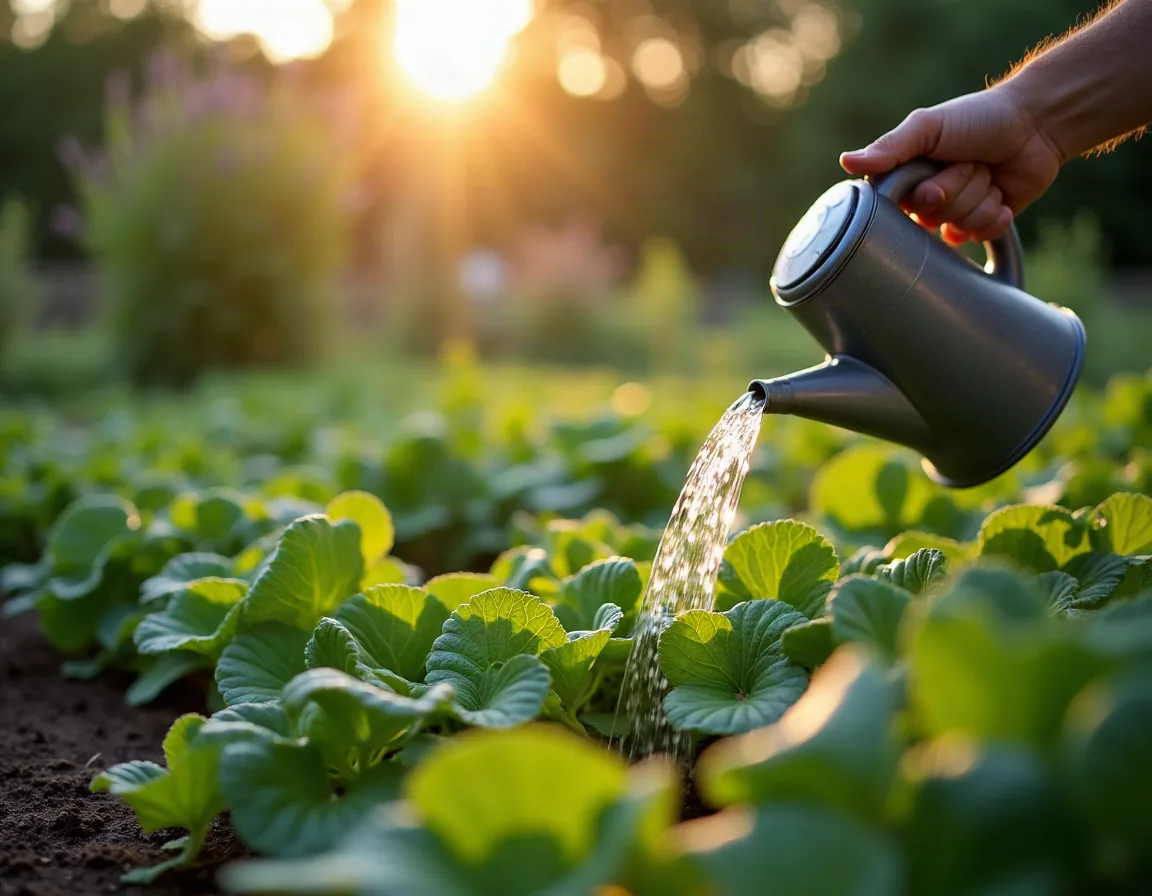
Water early in the morning or in the evening, not in the heat of the day, so less is lost to evaporation before it reaches the roots. Aim the water at the base of the plant so it soaks down to the roots, and give a good soak every two or three days rather than a light sprinkle every day. Watering less often but more deeply pushes roots down to find moisture, which makes plants far tougher in a dry spell.
| Watering well | |
|---|---|
| When | Early morning or evening, not in the heat of the day, so less is lost to evaporation |
| Where | At the base of the plant so it soaks down to the roots, not over the leaves |
| How much | A good soak every two or three days, rather than a light sprinkle daily |
| What with | Stored rainwater from a water butt where you can: warmer than mains, and it saves water |
| Priority | Pots, newly planted plants and anything wilting come first |
As a rough guide, about once a fortnight in June, rising to roughly every 10 days in the heat of July and August. Store rainwater in a water butt off the house, shed, garage or greenhouse where you can. It is warmer than mains water, so it is less of a shock to roots, and it keeps the tap off. Give priority to pots (restricted roots, little soil to draw on), to anything you planted this year, and to plants already wilting.
Why does deadheading keep flowers coming?
Deadheading is simply removing fading or dead flowers. Left alone, most plants pour their energy into setting seed and then stop flowering. Snip the old heads off and you redirect that energy into making more blooms, so the display lasts far longer and looks tidier into the bargain.
- Summer bedding (petunias, cosmos, dahlias): deadhead regularly, sometimes daily at the peak, to keep them covered in flower.
- Roses: snip fading blooms about once a week so repeat-flowering types keep going rather than setting hips and giving up.
- Border perennials: a going-over once a week or fortnight is usually plenty.
Pots, borders and hanging baskets all respond to the same treatment: feed, water and deadhead them together and they will flower for months.
What should I feed, and with what?
In summer the aim of feeding is flowers and fruit, so reach for a high-potassium (high-potash) feed. A liquid tomato feed is the obvious choice, and it is not just for tomatoes: it suits any fruiting plant, including courgettes and beans, plus hanging baskets and containers that have long since used up the feed in their compost.
- Feed tomatoes with a high-potassium tomato feed weekly once the first fruits have set.
- Courgettes are hungry plants and take a weekly high-potash feed happily.
- Hanging baskets and patio pots: feed every one to two weeks, as frequent watering washes nutrients straight out. Border plants in open ground rarely need it if the soil is in good heart.
How do I keep beans and courgettes cropping?
The single trick with summer crops is to pick often. Regular harvesting tells the plant it has not finished its job of setting seed, so it keeps flowering and fruiting. Leave the fruit to mature on the plant and it does the opposite: it slows right down.
- Courgettes: cut them small, around 10 to 15cm, and check every day or two in a warm spell. Miss a few days and you get marrows, and the plant stops producing new ones.
- Runner and French beans: pick young and tender, every couple of days, before the pods get stringy and start to bulge with seed.
- Salads, courgette flowers and the first tomatoes: keep taking them. A little and often beats a glut you cannot use.
Blight and summer-pruning trained fruit
Warm, damp summer weather is when tomato and potato blight takes hold. It is a disease that thrives in humidity, so in a muggy spell water tomatoes at the roots and keep the leaves as dry as you can, which slows it down. If you have had it before, grow blight-resistant varieties next time. There is more on spotting and managing it in my guide to common plant diseases.
Summer is also the time to prune trained apples and pears, the cordons, espaliers and fans. Do it once the bottom third of the new shoots has turned stiff and woody, which is usually from late July for pears and mid to late August for apples. Cut new shoots from the main stem back to three leaves above the basal cluster, and sideshoots to one leaf. This keeps the shape tight and lets light and air at the ripening fruit. Cordon currants and gooseberries can be summer-pruned in July too.
Summer in the wider gardening year
Summer jobs make most sense alongside what came before and what comes next. For the full year at a glance, see my gardening jobs by season hub, and for the shoulder seasons either side, see spring gardening jobs and autumn gardening jobs.
A little time every few days through June, July and August keeps borders full, baskets flowering and the veg plot cropping right into autumn. The gardens that look tired by August are almost always the ones that got thirsty, so keep the watering can moving.
Frequently asked questions
When is the best time to water in summer?
Early in the morning or in the evening, when it is cooler, so less water evaporates before it reaches the roots. Water at the base of the plant, not over the leaves, and give a good soak every two or three days rather than a light sprinkle every day. Watering less often but more deeply makes plants far tougher in dry weather.
How often should I feed plants in summer?
Feed fruiting plants and flowering pots with a high-potassium (tomato) feed. Tomatoes and courgettes take a weekly feed once they are cropping. Hanging baskets and patio containers want feeding every one to two weeks, as frequent watering washes nutrients out. Plants in good open ground rarely need extra feeding.
Why have my courgettes stopped producing?
Usually because fruit has been left to grow into marrows. Once a plant sets large fruit it slows down making new ones, so pick courgettes small, around 10 to 15cm, every day or two in warm weather. Keeping up a weekly high-potash feed and steady watering helps too.
Do I need to deadhead, and how often?
Yes, if you want a long display. Removing fading flowers stops the plant setting seed and keeps it flowering instead. Deadhead summer bedding regularly, sometimes daily at the peak, snip roses about once a week, and go over border perennials weekly or fortnightly.
What can I do about a hosepipe ban?
In dry summers water companies can bring in a temporary use (hosepipe) ban, but watering cans and buckets are still allowed. Store rainwater in a water butt, prioritise pots and newly planted plants, and water those by can. Established plants in the ground can usually ride out a dry spell. Check your own water company for the current rules.
How we checked this2 sourcesView sourcesHide
Our guides draw on expert bodies like the RHS and Garden Organic, plus experienced growers, read at source. We check every guide against those sources on the date shown, and where advice differs between them, we say so. Garden Plans is published by Limely.
- AuthorityGardening jobs for June, July and August, Royal Horticultural Society. Checked 26 Oct 2026.
- AuthoritySummer gardening jobs, Gardeners' World. Checked 26 Oct 2026.