The short answer
Raspberries are one of the easiest fruits to grow, as long as you know which type you have. Plant bare-root canes while they are dormant, between November and March, give them a sunny, sheltered spot and a line of posts and wires to lean on, then prune to suit the type. Summer-fruiting canes fruit on last year's growth, so you cut out the old canes after picking. Autumn-fruiting canes fruit on this year's growth, so you simply cut the whole plant to the ground in late winter. Get that right and they crop for years.
Raspberries at a glance
Raspberries are a long-lived crop. A row of canes planted now will fruit for ten years or more, and they are far less fussy than they look: the main jobs are putting up a support, pruning at the right time and stopping them wandering across the garden.
| Raspberries | |
|---|---|
| Plant | Bare-root canes while dormant, November to March |
| Position | Sun or light shade, sheltered from strong wind |
| Soil | Fertile, well-drained, slightly acidic (ideally pH 6 to 6.7) |
| Spacing | 40 to 60cm (16 to 24in) apart; 1.5 to 2m (5 to 6.5ft) between rows |
| Harvest | Summer types from June; autumn types from August into October |
| Watch for | Suckers spreading, raspberry beetle, birds |
Summer or autumn raspberries? Pick the type first
Before you buy a single cane, decide which type you want, because everything else, the support and especially the pruning, follows from it. There are two kinds, and they fruit on completely different wood.
- Summer-fruiting raspberries fruit on last year's canes. They are tall and bushy, around 1.8m (6ft), and crop from early to late summer, usually from their second summer onwards. They need sturdy support and the most careful pruning.
- Autumn-fruiting raspberries fruit on this year's canes. They are more compact, usually 1.2 to 1.5m (4 to 5ft), and crop from late summer into autumn. New plants fruit in their first year, and pruning is a single easy cut.
If you grow one of each, you can pick fresh raspberries from June right through to October. For a small plot or a first attempt I would start with autumn-fruiting canes: they crop in their first year, need less support and are much harder to get wrong.
Planting bare-root canes
Raspberries are nearly always sold as bare-root canes, bundles of dormant stems with no pot. Plant them while they are dormant, between November and March, which is both the cheapest way to buy them and the time they establish best. Give them a sunny or lightly shaded spot, sheltered from strong wind, in fertile, well-drained soil that is slightly acidic, ideally around pH 6 to 6.7.
- Soak the bare roots in a bucket of water for an hour or two before planting so they are not going in dry.
- Set the canes 40 to 60cm (16 to 24in) apart, with 1.5 to 2m (5 to 6.5ft) between rows if you have more than one.
- Plant shallowly: the first roots should sit no more than 5cm (2in) below the surface. Raspberries hate being buried deep, so spread the roots out and only just cover them.
- After planting, if the canes have not already been cut back, trim them down to 15 to 22cm to push out strong new growth from the base.
Putting up a support
Summer raspberries in particular grow tall and heavy, and will flop and snap without something to lean on. The usual answer is a line of posts and horizontal wires that the canes are tied in to.
- For summer-fruiting canes, set a post 1.8m (6ft) tall at each end of the row and run three lengths of strong galvanised wire between them, spaced about 60cm (2ft) apart up the posts. Tie the canes in as they grow.
- For autumn-fruiting canes, which are shorter and more self-supporting, a lower framework of posts around 60cm (2ft) tall with a wire either side is plenty to stop them sprawling into the path.
Keeping the canes tied in and spaced out is not just tidiness. Air moving through an open row dries the leaves and cuts the risk of fungal problems, and it makes picking far easier.
Pruning: the one job that depends on the type
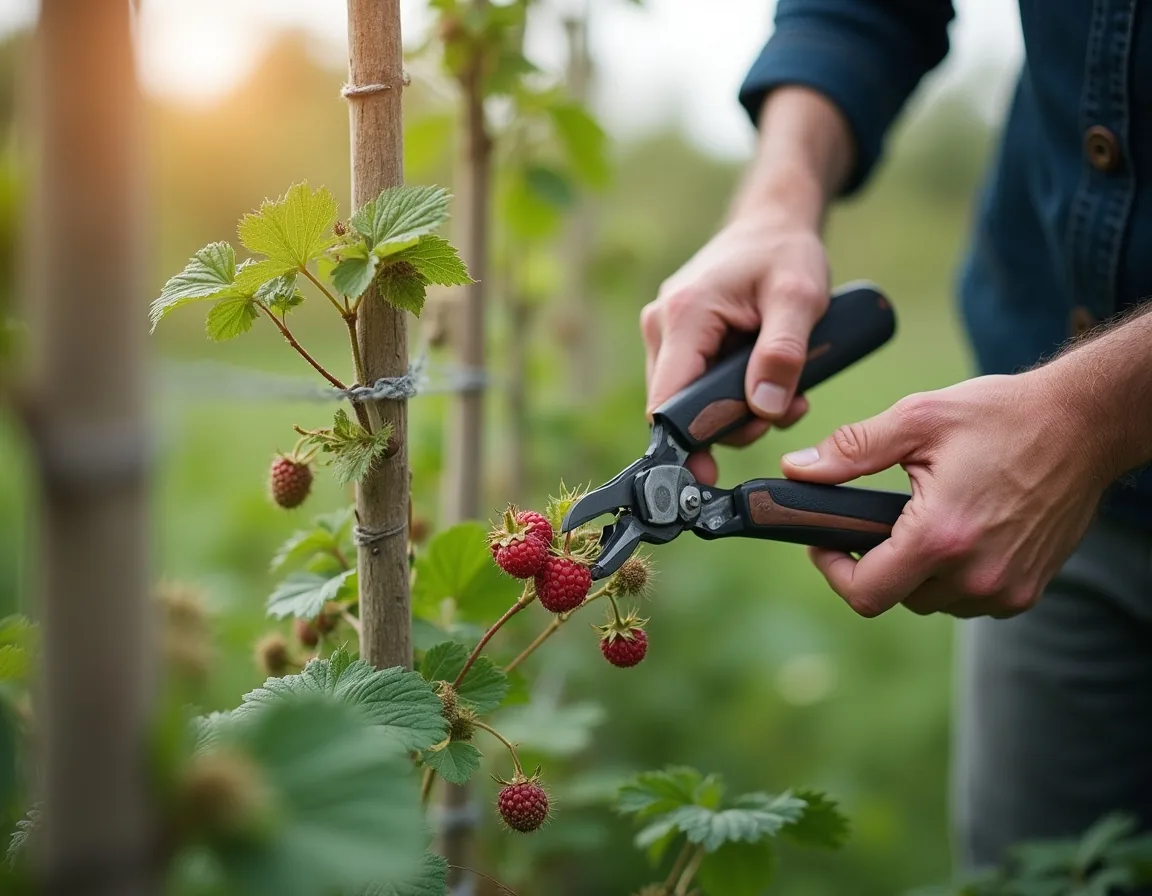
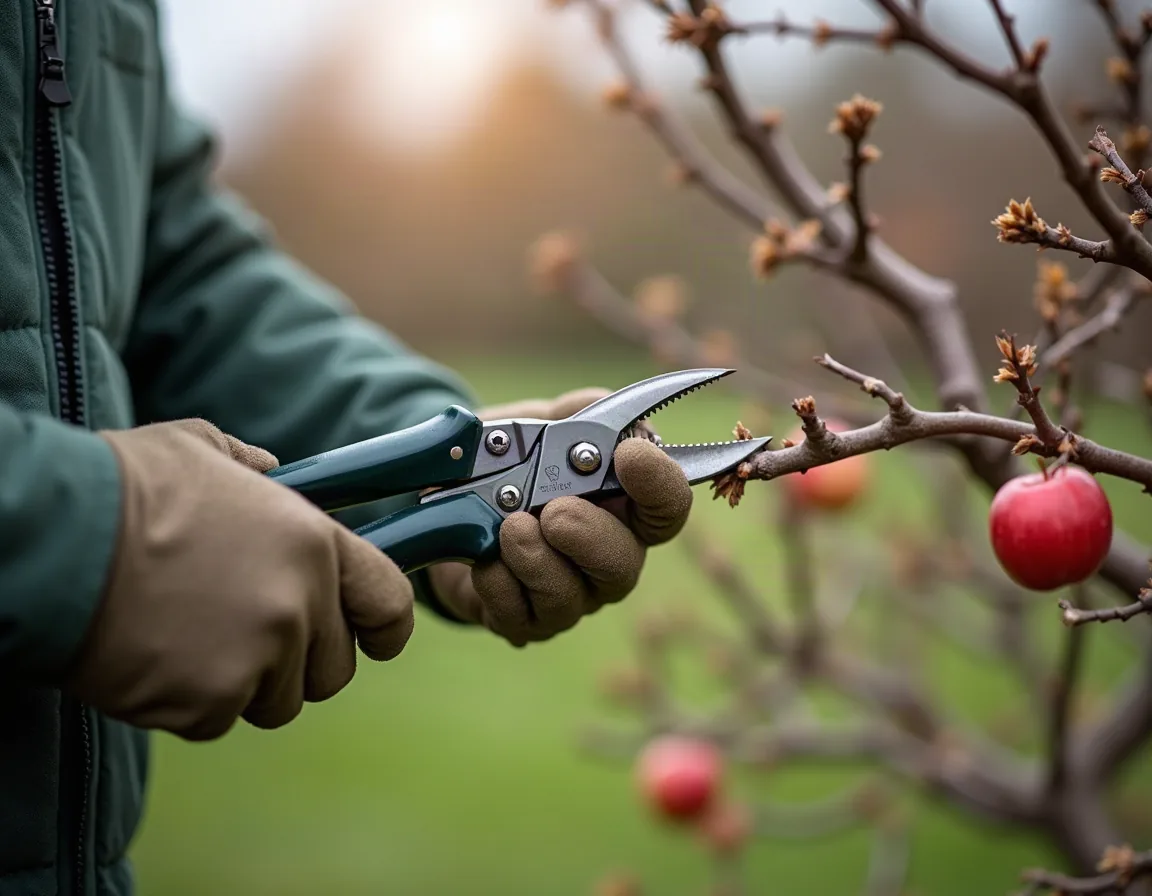
This is where summer and autumn raspberries part ways, and getting it wrong is the usual reason a healthy-looking row stops fruiting. Prune the right wood at the right time and you will not go wrong.
| Type | Fruits on | When to prune | How |
|---|---|---|---|
| Summer-fruiting | Last year's canes (one-year-old stems) | Straight after fruiting, then a tidy-up in February | Cut every cane that carried fruit right down to ground level, then tie in the strongest six to eight new green canes per plant. In February, trim those canes to a bud about 10cm (4in) above the top wire. |
| Autumn-fruiting | This year's canes (current-season stems) | February (late winter) | Cut every cane right down to ground level. There is no need to tell old from new wood: the whole plant comes down and fruits again on fresh canes the same year. |
In short: summer canes carry fruit on wood made the previous year, so you remove only the canes that have just fruited and keep this year's new green canes for next summer. In February you trim those kept canes to a bud about 10cm (4in) above the top wire. Autumn canes fruit on brand-new wood, so the whole plant is cut to the ground in February and grows back to fruit again the same year.
Watering, feeding and suckers
Newly planted canes need watering regularly through their first growing season while the roots take hold, and in dry spells after that. Well-established plants in open ground usually cope without extra water, apart from a long drought when the fruit is swelling.
In late winter or early spring, feed with a general fertiliser and lay a 5 to 7.5cm (2 to 3in) mulch of well-rotted organic matter along the row. The mulch feeds the plants, holds moisture and keeps weeds down. Keep it off the canes themselves.
Raspberries spread by suckers, new canes that pop up from the roots, often a good distance from the row. Left alone they march across a bed, so pull up or dig out any that appear outside the space you have given them. It is the single job most people forget, and the reason raspberries get a reputation for taking over.
Harvesting
Summer varieties start cropping from June, with later ones ripening into September. Autumn types pick up where they leave off, cropping from August and often carrying on into October. Grow both and you have fresh fruit for most of the season.
Pick when the berries are richly coloured, plump and come away easily from the stalk, leaving the white plug behind. A ripe raspberry almost falls into your hand. Go over the row every couple of days in the peak, as the fruit does not keep on the cane, and eat or freeze them quickly because they do not store long once picked.
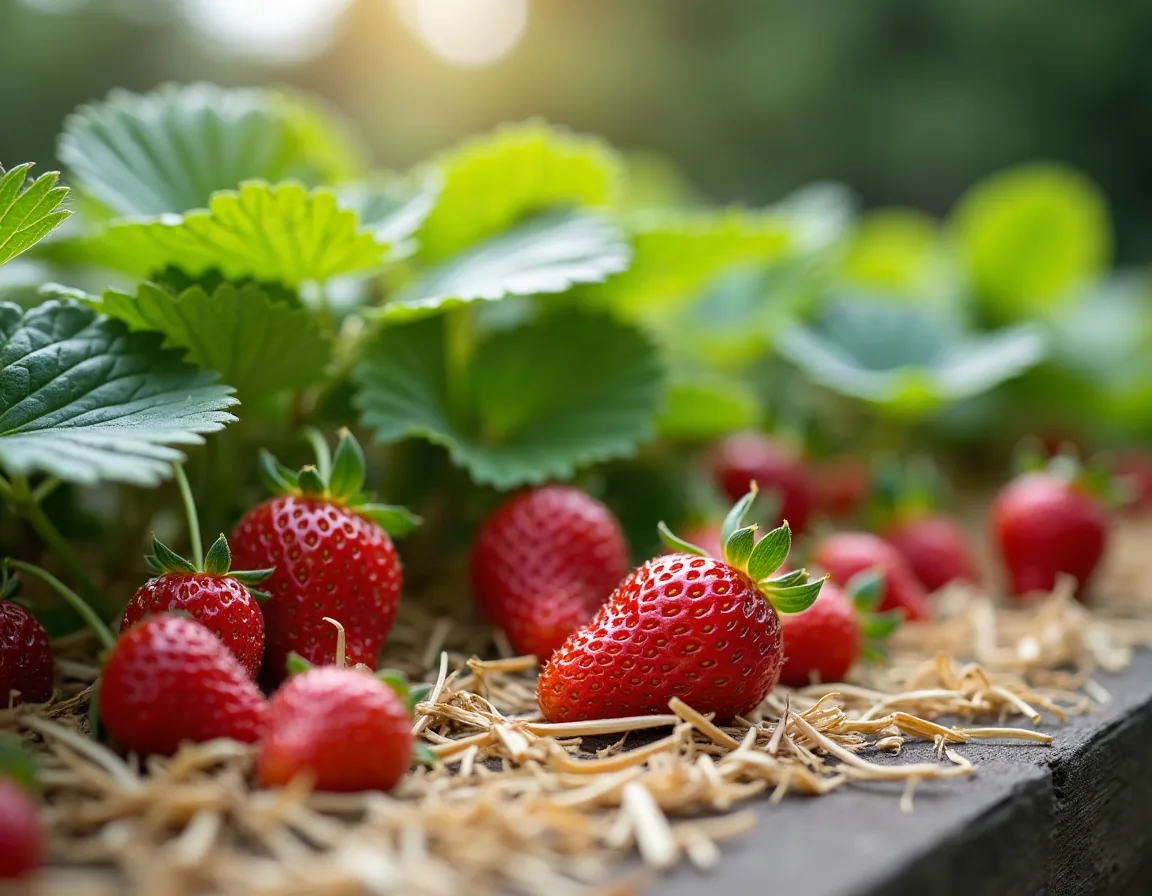
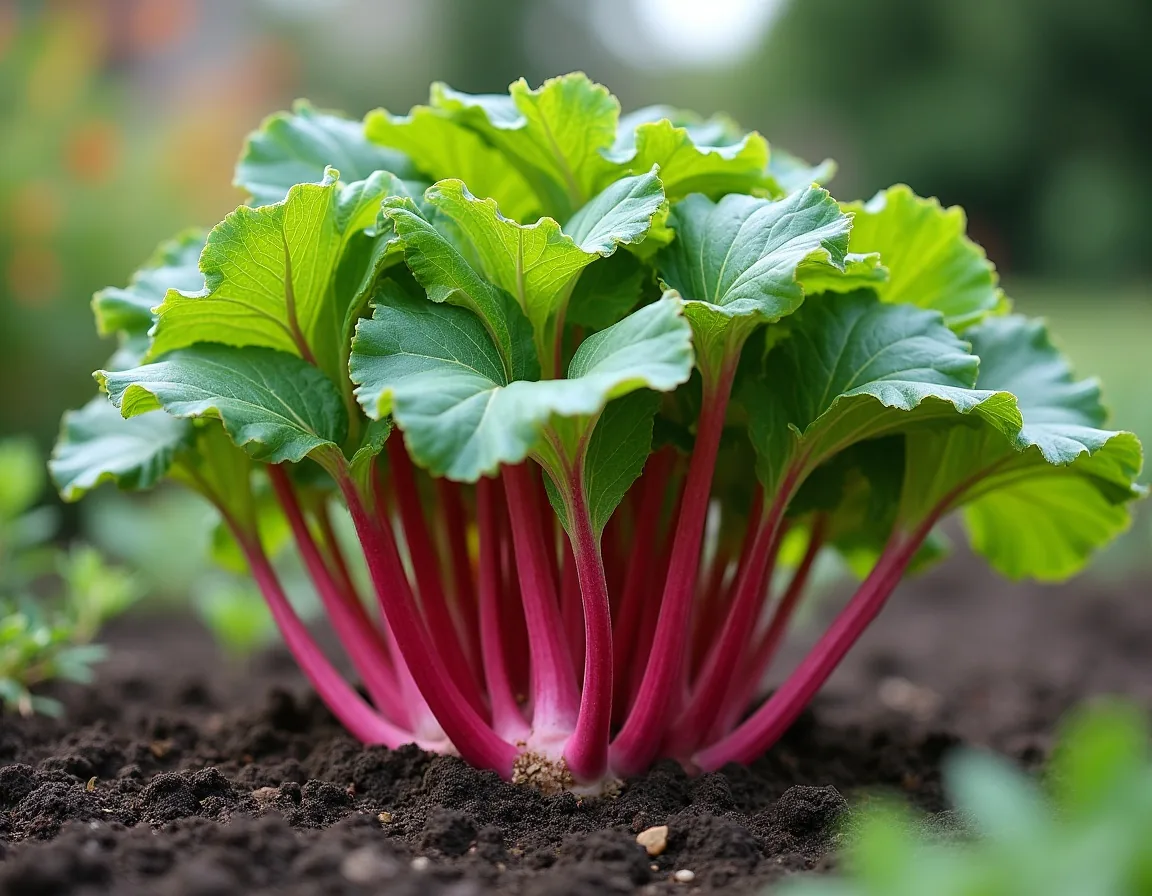
For where soft fruit fits in the garden overall, see growing fruit in the UK, and for other easy croppers try growing strawberries and growing rhubarb.
Varieties to try
Raspberries come in summer and autumn types, and in red and gold. These carry an RHS Award of Garden Merit, so they are reliable in UK gardens:
| Variety | Notes |
|---|---|
| 'Glen Ample' AGM | Summer; high-yielding and disease-resistant, a good all-rounder |
| 'Tulameen' AGM | Summer; large, sweet, conical fruit with a long picking season |
| 'Malling Jewel' AGM | Summer; compact with large berries, good for smaller plots |
| 'Glen Magna' AGM | Summer; sweet, dark-red berries |
| 'Joan J' AGM | Autumn; heavy crops on spine-free canes |
| 'All Gold' AGM | Autumn; yellow fruits, a sweeter novelty worth a row |
Frequently asked questions
What is the difference between summer and autumn raspberries?
They fruit on different wood, which changes how you prune them. Summer-fruiting raspberries fruit on canes grown the previous year, so you cut out the fruited canes after picking and keep the new ones for next year. Autumn-fruiting raspberries fruit on canes grown the same year, so you cut the whole plant to the ground in February and it fruits again that autumn.
When and how do I prune raspberries?
For summer types, cut every fruited cane to ground level straight after harvest, tie in the strongest six to eight new green canes, then in February trim them to a bud about 10cm (4in) above the top wire. For autumn types, simply cut all canes to the ground in February. Never cut summer canes to the ground in winter or you lose next year's crop.
When should I plant raspberry canes?
Plant bare-root canes while they are dormant, between November and March. That is when they are cheapest to buy and establish best. Soak the roots first, space the canes 40 to 60cm (16 to 24in) apart, and plant shallow so the first roots are no more than 5cm (2in) below the surface.
Do raspberries need support?
Summer raspberries do, as they grow to about 1.8m (6ft) and flop without it. Set a 1.8m (6ft) post at each end of the row and run three galvanised wires between them, then tie the canes in. Autumn raspberries are shorter and more self-supporting, so a lower framework around 60cm (2ft) with a wire each side is enough.
Why are my raspberries spreading everywhere?
Raspberries send up suckers, new canes from the roots, often well outside the row. That is normal, but left alone they spread across the bed. Pull up or dig out any canes that appear outside the space you have allotted, and they will stay put.
How we checked this2 sourcesView sourcesHide
Our guides draw on expert bodies like the RHS and Garden Organic, plus experienced growers, read at source. We check every guide against those sources on the date shown, and where advice differs between them, we say so. Garden Plans is published by Limely.
- AuthorityRaspberries: grow your own, Royal Horticultural Society. Checked 26 Oct 2026.
- AuthorityHow to grow raspberries, Gardeners' World. Checked 26 Oct 2026.