The short answer
Hedgehogs are in trouble in the UK, and gardens are their best hope. The single most useful thing you can do is cut a 13cm x 13cm (about 5in, roughly the size of a CD case) gap in your fences and under walls so they can roam between gardens. Then leave out meaty food and a shallow dish of water, never bread or milk, stop using slug pellets and pesticides, and make the garden safe by checking long grass before you strim, ramping steep ponds, and never lighting an un-checked bonfire. Add a log pile or hedgehog house for shelter.
Why your garden matters to hedgehogs
Hedgehogs are a species of conservation concern in the UK, and most of us only ever see them because they pass through our gardens at night. A single hedgehog travels up to a mile (roughly 1 to 2km) in one night looking for food, shelter and a mate, so no one garden is ever big enough on its own. Join your plot up with the ones around it and the whole street becomes hedgehog habitat.
Here is what actually helps, and why. Do the first one even if you do nothing else.
| Do this | Why it helps |
|---|---|
| Cut a 13cm x 13cm gap in fences and under walls | A hedgehog highway. Hedgehogs roam up to a mile a night, so a single garden is too small; the gap lets them through but stops nearly all pets. |
| Leave out meaty food and a shallow dish of water | Meat-based wet dog or cat food, or dry cat food, helps in cold or dry spells. Never milk (hedgehogs are lactose intolerant) or bread (worthless to them). |
| Stop using slug pellets and pesticides | Toxins pass up the food chain through slugs and snails, and pesticides remove the insects and worms hedgehogs eat. |
| Check long grass and borders before strimming or mowing | Hedgehogs sleep in long grass and under hedges by day; a strimmer or robot mower can kill or maim them. |
| Fit a ramp to steep-sided ponds and cover drains | Hedgehogs swim but drown when they cannot climb out; a sloping escape ramp and drain lids prevent it. |
| Build and burn a bonfire the same day, or move it first | Hedgehogs nest in unlit bonfire heaps. Build just before lighting, or move the pile, and light from one corner. |
| Leave a log pile or put up a hedgehog house | Quiet, shady shelter for nesting and for hibernation from roughly October to March or April. |
| Clear away netting, twine and old compost bags | Loose plastic netting and bailer twine on the ground entangle hedgehogs. |
Make a hedgehog highway
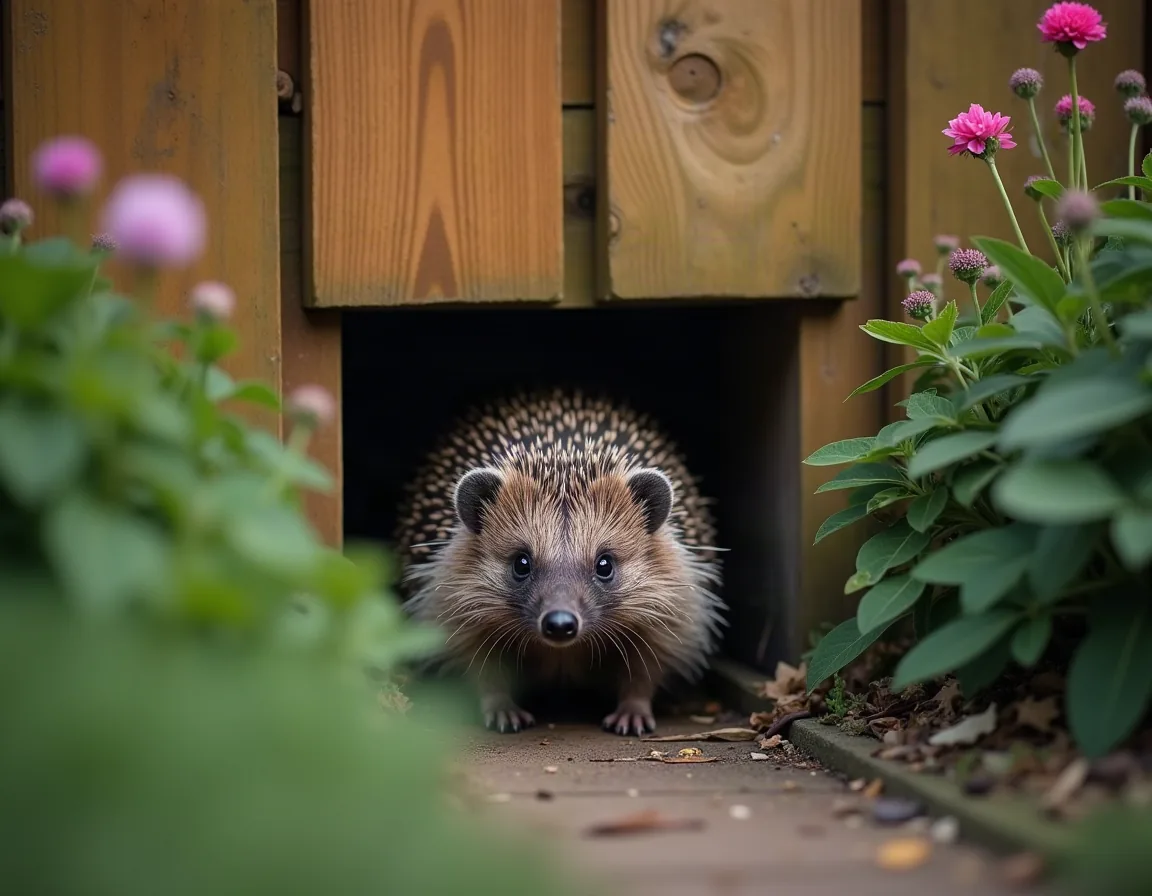
This is the one that matters most. A hedgehog highway is simply a 13cm x 13cm (about 5in, roughly the size of a CD case) gap at the base of a fence or wall. That size is big enough for a hedgehog but too small for nearly all pets, so you are not opening the garden up to next door's dog. A fully hedgehog-friendly garden the animal cannot actually get into does nobody any good, so start here.
- Cut or drill a 13cm square hole through a timber fence panel, low down at ground level.
- Remove a single brick from the bottom of a wall, or dig a shallow channel under a wall, fence or gate.
- Ask your neighbours first, then ask them to make a matching gap on their far side. The more gardens you link, the further the hedgehogs can roam.
If you are building a wildlife garden from scratch, I would design the gaps in from the start: see our wildlife garden guide.
Food and water
Hedgehogs feed themselves on worms, beetles and caterpillars, so you are topping up rather than replacing their diet. It makes the biggest difference in cold or dry spells, when their natural food is scarce, and around autumn when they are fattening up for hibernation. Put the food out in a shallow dish in a sheltered spot, or a feeding station, around sunset.
| Do leave out | Never give |
|---|---|
|
|
Keep a shallow dish of fresh water out all year round and top it up in hot, dry weather. A pond with a gently sloping edge gives them a drink too: see how to make a wildlife pond.
Shelter and hibernation
Hedgehogs need somewhere quiet, dry and shady to nest by day, to raise young in summer, and to hibernate through winter. Hibernation runs from roughly October or November to March or April, and a disturbed hedgehog burns fat it cannot spare, so leave sleeping animals well alone.
- Leave a log pile or a heap of leaves in a corner. It is free, it shelters hedgehogs, and it feeds the insects they eat.
- Put up a hedgehog house in a quiet, shady spot out of the wind and worst of the rain.
- Let a corner go wild. Long grass, a messy hedge base and fallen leaves are shelter, not untidiness.
Remove the hazards that kill them
Most garden hedgehog deaths are avoidable. A few habits make your plot far safer.
- Check before you strim or mow. Hedgehogs sleep in long grass and under hedges by day, so go through the area by hand first. A strimmer or a robotic mower can kill or badly injure a hidden hedgehog, so check your robot mower has wildlife safeguards.
- Never light an un-checked bonfire. Hedgehogs nest in unlit heaps. Build the pile the same day you burn it, or take it apart and rebuild it on fresh ground first, then light from one corner so anything inside can escape.
- Make ponds escapable. Hedgehogs can swim but drown when they cannot climb out, so fit a gently sloping ramp to any steep-sided pond and cover open drains with lids.
- Clear away netting and litter. Loose plastic netting, old compost bags and bailer twine tangle hedgehogs. Keep them lifted off the ground or thrown away.
- Drop the pesticides. Slug pellets and sprays strip out the insects, worms and slugs hedgehogs rely on, and can poison them indirectly. Garden for natural predators instead.
Frequently asked questions
How big should a hedgehog highway gap be?
A 13cm x 13cm gap, about 5in, or roughly the size of a CD case. That is big enough for a hedgehog to pass through but too small for nearly all pets. Make it low down at the base of a fence or wall, dig a channel underneath, or remove one brick, and ask your neighbour to add a matching gap so the hedgehogs can travel between gardens.
What should I feed hedgehogs, and what should I never give them?
Leave out meat-based wet dog or cat food, dry cat or kitten food, or specially made hedgehog food with a high meat content, plus a shallow dish of fresh water. Never give them milk, because hedgehogs are lactose intolerant, and skip bread, which is low in energy and fairly worthless to them. Put food out in a shallow dish in a sheltered spot around sunset.
Are slug pellets bad for hedgehogs?
Yes. The toxins pass up the food chain: a hedgehog eats slugs and snails that have taken in the pellets, and the poison is passed on. Metaldehyde pellets are now banned in any case. Control slugs without poison, for example by watering in the morning and encouraging natural predators, and let the hedgehogs do some of the work for you.
How do I keep hedgehogs safe when I strim or light a bonfire?
Always check the whole area by hand before you strim or mow, as hedgehogs sleep in long grass and under hedges by day, and make sure any robotic mower has wildlife safeguards. For a bonfire, build the pile the same day you burn it, or take it apart and rebuild it on clear ground first, then light it from one corner so anything inside can get out.
When do hedgehogs hibernate, and should I disturb them?
Hedgehogs usually hibernate from October or November through to March or April, and nest to breed in summer. Do not disturb a hibernating or nesting hedgehog: waking one burns fat it needs to survive the winter. Leave log piles, leaf heaps and hedgehog houses undisturbed, and check for residents before any winter tidy-up.
How we checked this2 sourcesView sourcesHide
Our guides draw on expert bodies like the RHS and Garden Organic, plus experienced growers, read at source. We check every guide against those sources on the date shown, and where advice differs between them, we say so. Garden Plans is published by Limely.
- AuthorityHedgehog highways and feeding hedgehogs, Hedgehog Street (BHPS and PTES). Checked 26 Oct 2026.
- AuthorityHedgehog-friendly gardening tips, Royal Horticultural Society. Checked 26 Oct 2026.